

Genuine Volkswagen Parts for Classic Models: 2026 Guide
Table of Contents
- Why Genuine Volkswagen Parts Matter for Classic Models
- Identifying Genuine Classic VW Parts: A Practical Guide
- OEM vs. Aftermarket: Compatibility and Long-Term Reliability
- Vintage VW Restoration Parts: Sourcing Hard-to-Find Components
- Documentation, Provenance, and Integrating Modern Upgrades
- OEM Volkswagen Parts Online: Shipping, Fitment, and Quality Assurance
- Conclusion
Last Updated: August 18, 2026
Why Genuine Volkswagen Parts Matter for Classic Models
Genuine volkswagen parts for classic models are not interchangeable with generic substitutes, and the gap in quality is wider than most enthusiasts expect. At EUROPEAN OEM PARTS, we work with owners of vintage Beetles, Buses, Golfs, and Vanagons who have learned this lesson the hard way: an incorrect component installed on a classic VW can compromise fitment, accelerate wear on adjacent systems, and ultimately reduce the vehicle's long-term value.
The core issue is engineering specificity. Volkswagen engineered its classic models to exacting tolerances, and OEM components are manufactured to those same specifications. An aftermarket part may fit loosely, use inferior materials, or omit the precise geometry that allows the component to perform correctly under load. For a daily driver, that might mean a slightly rough idle. For a restored classic, it can mean the difference between a concours-quality build and a vehicle that never quite drives right.
There is also the question of authenticity. Collectors and appraisers increasingly scrutinize restoration quality. Vehicles documented with genuine OEM components command stronger resale values and higher insurance appraisals. As noted by Hagerty's classic car valuation guidelines, provenance and parts authenticity are among the primary factors that separate a good restoration from a great one.
The practical argument is straightforward: sourcing genuine volkswagen parts is harder than it used to be, but the effort pays off in reliability, authenticity, and resale value. The sections below walk through how to identify real components, where to find them, and how to avoid the counterfeits that have flooded the market.
Identifying Genuine Classic VW Parts: A Practical Guide
Identifying genuine classic VW parts is the first skill every serious restorer needs, because the market for vintage volkswagen components is riddled with convincing fakes and misrepresented aftermarket pieces. Genuine OEM parts carry specific identifiers that aftermarket manufacturers either cannot replicate accurately or choose not to.
Reading Part Numbers and Factory Stampings
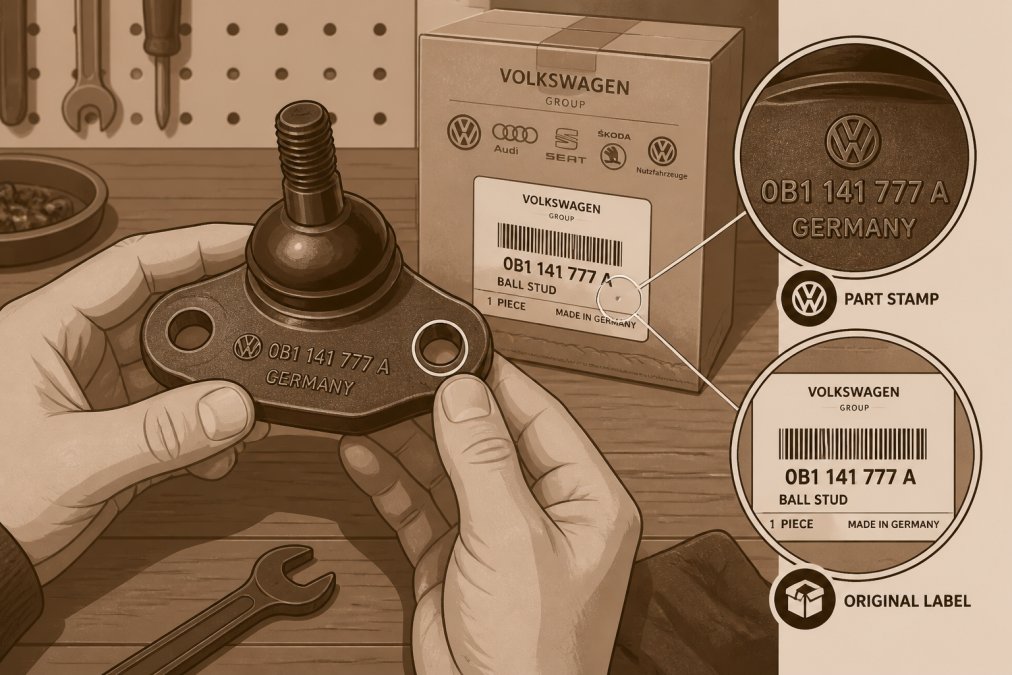
A genuine Volkswagen OEM part number follows a structured format: a three-digit group number, a three-digit subgroup number, and a suffix that indicates version or specification. For example, a part number formatted as 211 711 113 A tells a trained eye exactly which model group, system, and revision it belongs to.
On stamped metal components, the part number is pressed directly into the material during manufacture. This stamping is precise, evenly spaced, and sits flush with the surrounding metal. Aftermarket parts that copy OEM numbers often use inconsistent font depth, uneven character spacing, or laser-etched markings that look subtly different under raking light.
Key identifiers to check on any classic VW component:
- Part number format: Matches the VW numbering convention for the relevant model year and chassis number
- Date code: Many factory original components include a production date stamp, typically a two-digit year followed by a week number
- Material finish: OEM parts use specific plating, coating, or casting processes; surfaces should be uniform with no rough edges or flash
- Country of origin markings: Pre-1980s components manufactured at German plants carry specific origin stamps consistent with the production era
Cross-referencing the part number against an official Volkswagen parts catalog or a verified technical resource like the Volkswagen Classic Parts catalog is the most reliable way to confirm authenticity before purchase.
Spotting Counterfeits: Packaging, Markings, and Build Quality
Counterfeit volkswagen parts have become more sophisticated, but they still fail on packaging details. Genuine OEM packaging uses a specific label format with a consistent font, barcode structure, and part number alignment. Counterfeit boxes frequently show slight color shifts, blurry printing, or label adhesive that peels at the corners.
Build quality is the other tell. Hold a genuine OEM brake component and an aftermarket copy side by side, and the weight difference is often immediate. Genuine parts use specified alloys and casting densities. Counterfeits cut material costs in ways that show up as lighter weight, visible porosity in castings, or inconsistent surface hardness.
OEM vs. Aftermarket: Compatibility and Long-Term Reliability
The compatibility question is where the OEM versus aftermarket debate gets concrete. Many aftermarket manufacturers claim their parts are "OEM equivalent," but that phrase covers a wide spectrum of quality and fitment accuracy.
OEM compatibility means the component was manufactured to the exact specifications Volkswagen used during original production. The mounting points, tolerances, and material specifications match what came off the assembly line. For classic models where adjacent components are also original, this precision matters: a slightly undersized seal or an imprecisely cast bracket can cause accelerated wear on the parts around it.
Aftermarket parts range from high-quality reproductions made by reputable suppliers to low-cost imports with minimal quality control. The challenge for classic VW owners is that the aftermarket catalog for vintage models is enormous, and the quality variance within that catalog is extreme. A reproduction rubber seal from a well-regarded supplier may perform identically to an OEM piece. A cheap casting from an unknown source may fail within a season.
| Part Type | OEM Advantage | Aftermarket Risk | Recommendation |
|---|---|---|---|
| Rubber seals and gaskets | Exact material spec, correct durometer | Wrong hardness, premature cracking | OEM preferred |
| Sheet metal panels | Factory stampings, correct gauge | Inconsistent gauge, poor fit | OEM or quality repro |
| Mechanical hardware | Correct thread spec, plating | Incorrect thread pitch, corrosion | OEM strongly preferred |
| Engine components | Tolerances matched to block spec | Clearance issues, accelerated wear | OEM only |
| Interior trim | Correct grain and color match | Color drift, wrong texture | OEM or verified repro |
The long-term reliability argument favors OEM parts on any component that interfaces with safety systems, engine internals, or structural elements. On cosmetic or lower-stress components, a well-sourced aftermarket part from a reputable supplier can be a reasonable alternative when OEM stock is exhausted.
Vintage VW Restoration Parts: Sourcing Hard-to-Find Components
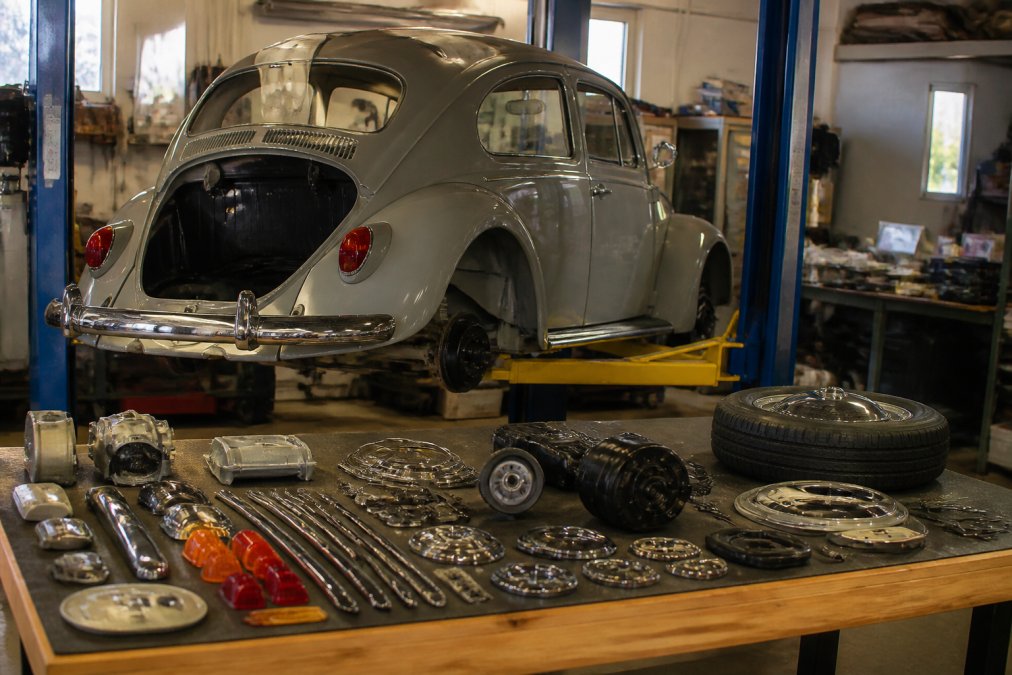
Sourcing vintage VW restoration parts is genuinely difficult, and it gets harder every year as original new-old-stock inventory dwindles. The good news is that Volkswagen's classic parts program and a network of specialized suppliers have kept many components available longer than most enthusiasts expected.
Matching Parts to Model Year and Chassis Number
The most common sourcing mistake is ordering by model name alone. A 1967 Beetle and a 1972 Beetle share a name but differ in dozens of mechanical specifications. The chassis number is the authoritative reference point. It encodes the model year, production plant, and sequence number, and it determines which components are correct for that specific vehicle.
Before sourcing any component, decode the chassis number using an official reference. According to the NHTSA VIN decoder and vehicle identification resources, vehicle identification numbers and chassis codes are the definitive guide to model-year-specific fitment. For pre-1981 VW models that predate the standardized 17-digit VIN format, the earlier chassis number conventions require a Volkswagen-specific decoding reference.
Engine codes add another layer of specificity. Many classic VW engines were updated mid-production-year, meaning two vehicles with the same model year can require different components depending on their engine code suffix. Always cross-reference both chassis number and engine code when sourcing internal engine components.
Reconditioning and Sustainability: When NOS Isn't an Option
New-old-stock components are the gold standard for classic VW restoration, but NOS availability is finite. When a genuine NOS part cannot be sourced, reconditioning an original component is often the more sustainable and authenticity-preserving choice compared to installing an aftermarket replacement.
Reconditioning keeps original factory-stamped components in the vehicle, which matters for authenticity documentation. A professionally reconditioned original carburetor, for example, retains its factory casting numbers and original machining. An aftermarket replacement does not. For vehicles being prepared for judged concours events, this distinction is decisive.
Sustainability is also a practical argument. Reconditioning extends the service life of components that cannot be replaced with genuine OEM equivalents, reduces demand for new manufacturing, and preserves the finite supply of original parts for future restorers. Many specialists in the classic VW community offer professional reconditioning for carburetors, distributors, brake components, and electrical systems.
Documentation, Provenance, and Integrating Modern Upgrades
Documentation is the part of a classic VW restoration that separates a credible build from an unverifiable one. A vehicle with a complete parts history, including receipts, part numbers, and installation records, is worth more, insures more easily, and sells more confidently than an identical vehicle without documentation.
Provenance means being able to demonstrate, component by component, that the parts installed are what they claim to be. This includes retaining original packaging, photographing part number stampings before installation, and maintaining a restoration log that records each component's source, part number, and installation date.
Integrating modern upgrades into a classic VW requires careful documentation for a different reason: buyers and appraisers need to know what has been modified. Modern upgrades that are commonly integrated into classic VW restorations include:
- Electronic ignition systems: Replace points-based distributors with more reliable electronic equivalents while retaining the original distributor housing
- Alternator conversions: Upgrade from generator to alternator for improved electrical reliability, particularly when adding modern accessories
- Disc brake conversions: Front disc brake upgrades significantly improve stopping performance while using bolt-on hardware designed for VW chassis specifications
- Fuel injection adaptations: Weber and other carburetor replacements that maintain the original engine's external appearance
The key principle for any modern upgrade is reversibility and documentation. If the modification uses original mounting points and retains the original components in storage, the vehicle's authenticity is preserved. As the SEMA Action Network's guidance on collector vehicle modifications notes, modifications that are reversible and documented are treated very differently from permanent alterations when it comes to insurance and valuation.
OEM Volkswagen Parts Online: Shipping, Fitment, and Quality Assurance
Ordering OEM volkswagen parts online introduces a set of practical concerns that brick-and-mortar purchasing does not. Fitment verification, shipping logistics for fragile or oversized components, and quality assurance on delivery all require attention.
Fitment verification starts before the order is placed. A reliable online supplier will cross-reference your chassis number and engine code against their catalog before confirming that a part is correct for your vehicle. This is not a courtesy, it is the baseline expectation. Suppliers who allow you to order by model name alone, without chassis number verification, are accepting returns as a cost of doing business. That is not a system that serves the buyer.
EUROPEAN OEM PARTS addresses this directly: our platform provides industry expertise to help customers identify the correct component before purchase, reducing the risk of fitment errors on orders for older or harder-to-specify models.
Shipping logistics for classic VW components deserve specific attention. Sheet metal panels, glass, and large body components require freight shipping with appropriate packaging. Fragile components like carburetors and instrument clusters need individual padding and rigid outer packaging. When ordering from any supplier, confirm the packaging method for fragile items before the order ships.
Quality assurance on delivery means inspecting every component before installation:
- Verify the part number on the component matches what was ordered
- Check packaging for signs of prior opening or repackaging
- Inspect stampings and markings against the identification criteria covered earlier
- Test-fit the component before applying any sealants or torquing fasteners
- Photograph the part number and packaging label before installation
For high-value engine components, cross-referencing the received part against the official Volkswagen parts catalog is worth the extra step. The Volkswagen of America's official parts and accessories resources provides model-specific reference information that can confirm correct part identification.
Classic VW restoration demands the right parts, correctly identified and properly documented. The challenge is that the market for vintage volkswagen components rewards careful buyers and punishes careless ones. EUROPEAN OEM PARTS offers genuine OEM components for Volkswagen models with fast nationwide shipping, fitment expertise, and a curated inventory built for enthusiasts who will not accept substitutes. Get started with EUROPEAN OEM PARTS and source the authentic components your restoration deserves.
Frequently Asked Questions
How do I verify if a Volkswagen part is genuinely OEM?
Check the part number stamped directly onto the component and compare it against the official VW parts catalog for your model year. Genuine Volkswagen parts arrive in branded factory packaging with a matching part number on the box. The build quality, material weight, finish consistency, and fitment precision, should match OEM specifications exactly. If a price seems unusually low or the packaging looks generic, treat that as a red flag and request documentation of origin before purchasing.
Are OEM parts better than aftermarket for classic Volkswagen restoration?
For a restoration project where authenticity and long-term reliability matter, genuine OEM Volkswagen parts are the stronger choice. They are manufactured to the original factory specifications, ensuring correct fitment by chassis number and model year. Aftermarket components vary widely in quality control and may not meet the technical specifications required for air-cooled or early water-cooled engines. Using OEM parts also preserves the vehicle's value and simplifies future component identification when you need replacements.
Where can I buy genuine Volkswagen parts for classic and vintage models online?
Specialized online retailers that focus exclusively on European OEM components are your most reliable source for genuine Volkswagen parts. Look for suppliers who catalog parts by model year, engine code, and chassis number, and who can confirm OEM origin with factory part numbers. Avoid generic marketplaces where counterfeit or mislabeled aftermarket parts are common. A reputable OEM-focused supplier will offer fitment verification, knowledgeable support, and clear return policies, especially important for older or hard-to-find components.
What should I know about shipping genuine VW parts for a restoration project?
Shipping timelines for genuine Volkswagen parts depend on whether the component is in active inventory or requires sourcing through the supply chain. Stamped metal components, glass, and large body panels require careful packaging to prevent damage in transit. When ordering for a restoration with a deadline, confirm stock availability before placing your order. A trustworthy supplier will provide tracking, communicate proactively about delays, and have a clear process for handling damaged or incorrect shipments so your project stays on schedule.
This article was written using GrandRanker