

VW Jetta Common Engine Repair Parts Guide
Table of Contents
- Which Engine Parts Fail Most Often in a VW Jetta?
- Signs of Failing Ignition Coils VW Jetta Owners Report
- OEM vs Aftermarket Engine Parts for Volkswagen: What to Choose
- Diagnostic-to-Purchase: Matching Symptoms to Jetta Engine Parts
- DIY vs Professional Repair: Difficulty Ratings for Jetta Engine Work
- Preventative Maintenance Schedules for High-Mileage Engines
- Finding the Right Genuine Volkswagen Parts for Your Repair
- Conclusion
- Frequently Asked Questions
Last Updated: September 9, 2026
Which Engine Parts Fail Most Often in a VW Jetta?
The most frequently replaced VW Jetta engine repair parts are ignition coil packs, spark plugs, and timing belt and water pump assemblies. These components operate under extreme heat and mechanical stress, and their failure rates spike at predictable mileage intervals. The failure patterns are remarkably consistent across model years.
Ignition Coil Packs and Spark Plugs
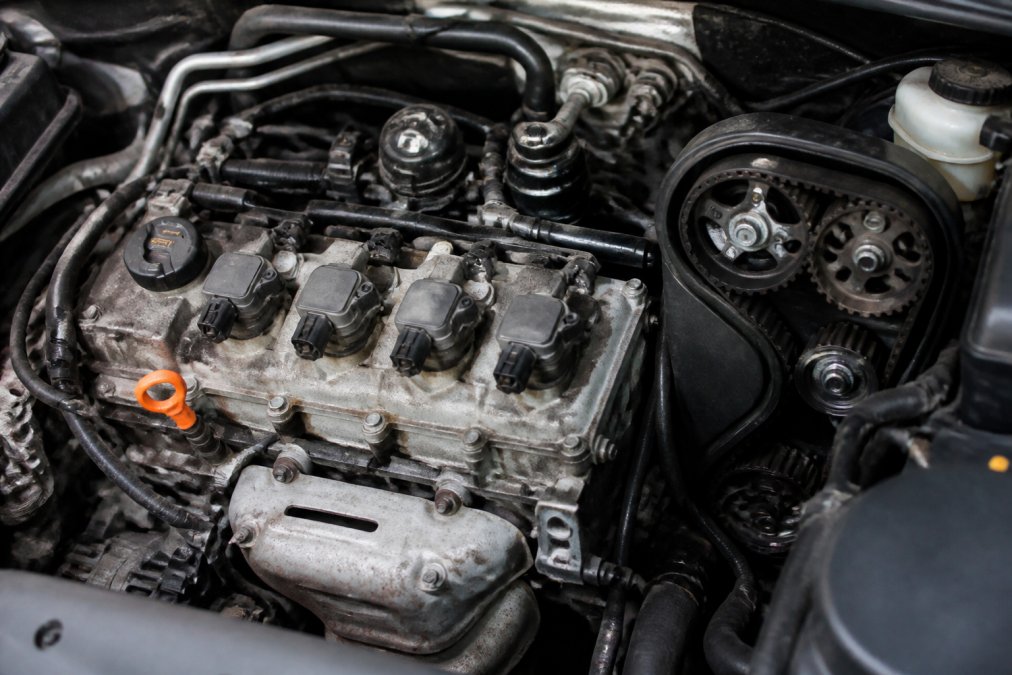
Ignition coil packs are the number one failure point on modern Jetta engines, particularly the 1.8T and 2.0T variants. These units convert battery voltage into the high voltage needed to fire the spark plugs, and they sit directly on top of the engine where they absorb relentless heat. A failing coil pack typically produces a check engine light with a misfire code, often P0301 through P0304.
Spark plugs wear out as a normal maintenance item, usually needing replacement every 40,000 to 60,000 miles. When plugs are worn, the ignition system works harder, which accelerates coil pack failure. Many owners replace all four coil packs and plugs together as a preventative set, since a single failed coil often signals that its siblings are close behind.
Timing Belt and Water Pump Assemblies
The timing belt synchronizes the crankshaft and camshaft, and on interference engines like the 2.5L and TDI diesels, a broken belt means bent valves and catastrophic internal damage. Volkswagen recommends replacing the timing belt and water pump as a kit, typically between 80,000 and 100,000 miles. The water pump is driven by the same belt, so replacing both at once eliminates a second labor charge later.
Signs of Failing Ignition Coils VW Jetta Owners Report
The classic symptom of a failing ignition coil is a rough idle that feels like the engine is shaking, especially when stopped at a light. You may also notice a loss of power during acceleration, a flashing check engine light, or a fuel smell from unburned gasoline. These signs of failing ignition coils VW Jetta owners report are consistent across the 1.8T, 2.0T, and 2.5L engines.
A misfire under load is another reliable indicator. If the car stutters or hesitates when you press the gas pedal, the coil for that cylinder is likely breaking down. The check engine light will usually flash during the misfire, which signals active catalyst damage, and you should avoid driving until the part is replaced.
OEM vs Aftermarket Engine Parts for Volkswagen: What to Choose
The debate over OEM vs aftermarket engine parts for Volkswagen comes down to a trade-off between upfront cost and long-term reliability. Genuine Volkswagen parts are engineered to the exact specifications of your engine, with the correct heat range for spark plugs and the precise resistance values for coil packs. Aftermarket parts often cost less, but quality varies dramatically between brands.
For critical engine components like coil packs, timing belts, and water pumps, genuine parts are the safer choice. These parts directly affect engine timing and combustion, where a mismatch has expensive consequences. The Volkswagen official parts and accessories guidance emphasizes using parts that meet factory specifications to maintain engine performance and warranty coverage.
Diagnostic-to-Purchase: Matching Symptoms to Jetta Engine Parts
The most efficient way to buy jetta engine repair parts is to work backward from the symptom to the specific component. But a symptom alone is rarely enough. The most valuable diagnostic step is identifying your engine code, as the same symptom on a 2.5L vs. a 2.0T points to different parts.
Engine Code Cheat Sheet: Which Jetta Engine Do You Have?
Before ordering any part, locate your engine code. It is printed on a sticker in the owner's manual, on the timing belt cover, or on the vehicle data sticker in the spare tire well. The most common Jetta engine codes in the U.S. market are:
- EA888 (2.0T): Found in GLI and SEL trims from 2012-2018. Codes include CPLA, CXCA, and DJHA.
- EA211 (1.4T): Found in base and mid-level trims from 2016-2021. Codes include CXSA and CZTA.
- 2.5L Inline-5 (CBUA/CBTA): Found in S and SE trims from 2011-2014. This engine is known for its durability but has specific intake manifold runner flap failures.
- TDI (EA288): Found in diesel models from 2015-2016. Codes include CRUA and CRVC.
Symptom-to-Part Mapping by Engine Code
EA888 (2.0T), Misfire at Cold Start: A cold-start misfire with codes P0301-P0304 on this engine is often not the coil pack. Carbon buildup on intake valves is the primary suspect after 60,000 miles. Direct injection means no fuel washes over the intake valves, so oil vapor and combustion byproducts bake onto them. The fix is walnut shell blasting, not a new coil. If the misfire is warm and under load, suspect the coil pack or spark plug.
EA211 (1.4T), Rough Idle with No Codes: This engine is sensitive to PCV (positive crankcase ventilation) valve failure. A failed PCV diaphragm causes a vacuum leak that produces a rough idle, but often no check engine light until the leak is severe. The part is inexpensive, but the intake manifold must be removed on some model years to access it. A smoke test is the definitive diagnostic.
2.5L Inline-5, Ticking Noise at Idle: A rhythmic ticking that disappears above 2,000 RPM is the hydraulic valve lifters. This engine is an interference design, so ignoring the noise risks bent valves if a lifter collapses completely. The repair requires removing the camshaft carrier, which is a professional-level job. The parts kit includes 20 lifters, new camshaft bolts, and sealant.
TDI (EA288), Excessive Exhaust Smoke: White smoke at idle with a sulfur smell points to a failing diesel particulate filter (DPF) or a fuel injector leaking into the cylinder. A forced regeneration via an OBD-II tool can sometimes clear a partially clogged DPF. If the injector is faulty, the repair requires removing the intake manifold and high-pressure fuel lines.
The Compression Test as a Gatekeeper
Before you order internal engine parts like piston rings or valves, run a compression test. A cold and warm compression test tells you whether the problem is mechanical or electronic. Low compression on one cylinder with a misfire code points to a burned valve or broken ring. Consistent compression across all cylinders points to ignition or fuel delivery. This single test prevents you from buying a $300 coil pack set when the real issue is a $40 valve cover gasket leaking oil into the spark plug well.
| Symptom | Engine Code | Likely Part | Diagnostic Check | Repair Difficulty |
|---|---|---|---|---|
| Cold-start misfire | EA888 (2.0T) | Intake valve carbon | Borescope inspection | Professional |
| Rough idle, no code | EA211 (1.4T) | PCV valve | Smoke test | Moderate |
| Ticking at idle | 2.5L (CBUA) | Hydraulic lifters | Stethoscope probe | Professional |
| White smoke, sulfur smell | TDI (EA288) | DPF or injector | Forced regen test | Professional |
| Warm misfire under load | Any | Coil pack or plug | Swap coil to another cylinder | Easy |
This engine-code-specific approach is the difference between guessing and diagnosing. When you know the code and the symptom, you can order the correct part the first time.
DIY vs Professional Repair: Difficulty Ratings for Jetta Engine Work
Replacing ignition coil packs and spark plugs is a genuine DIY job that most owners can complete in under an hour with basic hand tools. The coil packs sit on top of the engine, visible once the engine cover is removed, and each is held by a single bolt and electrical connector. The only risk is over-torquing the spark plugs, which can damage the cylinder head threads.
Timing belt and water pump replacement sits at the opposite end of the spectrum. This job requires removing the engine mount, accessory belts, and crankshaft damper, then locking the engine at top dead center. A mistake here means the valves and pistons collide when you rotate the engine. Most owners without a full shop manual and specialty tools should leave this to a professional. The labor cost is significant, but it is a fraction of the cost of an engine rebuild after a timing error.
Preventative Maintenance Schedules for High-Mileage Engines
A high-mileage Jetta rewards owners who follow a strict maintenance schedule. For best practices for VW engine longevity, the priority order is oil changes, cooling system service, and ignition system replacement. Oil changes with the correct viscosity and filter should happen every 5,000 to 7,500 miles, depending on driving conditions.
Cooling system service is equally critical. The water pump and thermostat should be replaced preventatively, and the coolant should be flushed every 40,000 miles. Overheating is the leading cause of cylinder head warping and head gasket failure on the 1.8T and 2.0T engines. A simple Car Care Council maintenance checklist can help you track these intervals and catch small issues before they become major repairs.
Finding the Right Genuine Volkswagen Parts for Your Repair
When you have identified the part you need, sourcing the correct component is the final step. Model year compatibility is critical, as Volkswagen changed engine designs and part numbers frequently across generations. A coil pack for a 2014 Jetta 1.8T will not fit a 2019 Jetta 1.4T, even though both are four-cylinder engines. Verify your engine code before ordering.
Decoding Volkswagen Part Numbers
Every genuine VW part carries a part number that tells you exactly what it fits. The format is three groups: a model code (e.g., 06J for the EA888 engine family), a main group code (e.g., 905 for ignition parts), and a suffix letter that indicates the revision level. For example, coil pack part number 06J905115F supersedes 06J905115E. A later revision often fixes a known failure mode. When ordering, ask for the latest suffix.
The Supersession Trap
Volkswagen routinely supersedes part numbers. The part you pull off your car may have been replaced by three newer versions over the years. A dealer or reputable parts supplier can run a supersession check. This is critical for older Jettas because a superseded part is often an improved design. For example, the original 2.5L valve cover gasket was revised to address oil seepage at the rear camshaft plug.
Sourcing Options Beyond the Dealer: Used and Remanufactured Parts
For high-mileage Jettas, a brand-new genuine part may cost more than the car is worth. This is where the used and remanufactured market becomes a legitimate option, but only if you source correctly.
Used Parts (Pick-and-Pull Yards): A low-mileage used coil pack or throttle body from a salvage yard can be a smart buy, but only if the donor car's engine code matches yours. Check the donor car's VIN and engine code sticker before pulling the part. Avoid used timing belts, water pumps, and tensioners, these are wear items that fail with age, not just mileage.
Remanufactured Parts: Remanufactured alternators, starters, and turbochargers are a middle ground. A reputable remanufacturer replaces all wear components, not just the failed part. Look for remanufacturers that provide a warranty of at least 12 months and that test the unit under load before shipping. Avoid "rebuilt" parts from unknown sellers that only clean and repaint the housing.
OEM vs. Genuine vs. Aftermarket, A Practical Distinction:
| Source | What It Is | Best Use Case | Risk Level |
|---|---|---|---|
| Genuine VW (dealer) | Factory part in VW box | Critical timing and ignition parts | Low |
| OEM (e.g., NGK, Bosch, Mann) | Made by the same factory that supplies VW, but sold under the supplier's brand | Spark plugs, filters, oil, sensors | Low |
| Aftermarket (major brands) | Made by a third party to meet or exceed specs | Mounts, gaskets, hoses | Medium |
| Aftermarket (no-name) | Unbranded or generic | Not recommended for engine internals | High |
A common pattern is that OEM-branded parts (NGK spark plugs, Bosch coil packs, Mann filters) are identical to the genuine VW part at a lower price. The genuine part is simply the OEM part in a VW box with a higher price tag. For parts like coil packs and sensors, buying the OEM brand is a smart way to get factory quality without the dealer markup.
What to Avoid When Sourcing Parts
- Counterfeit "Genuine" Parts: Online marketplaces are flooded with counterfeit VW parts, especially coil packs and sensors. The packaging looks identical, but the internal components are substandard. Buy from an authorized dealer or a reputable specialist, not from a third-party seller with stock photos.
- Used Timing Components: Never buy a used timing belt, tensioner, or water pump. These parts have internal wear that is invisible from the outside, and a failure destroys the engine.
- Mismatched Hardware: When you buy a used intake manifold or throttle body, verify that all mounting bolts and connectors are included. VW uses specialized Torx and triple-square fasteners that are not available at a typical hardware store.
For owners restoring vintage or high-mileage models, sourcing hard-to-find genuine parts is a specialized skill. EUROPEAN OEM PARTS stocks authentic Volkswagen components and can run a supersession check on your part number to ensure you receive the latest revision. We also carry supporting components, such as gasket sets and valve cover gaskets.
Conclusion
The most common VW Jetta engine repair parts, ignition coil packs, timing belts, and water pumps, fail at predictable intervals, and catching them early prevents expensive secondary damage. Whether you are swapping a coil pack in your driveway or scheduling a timing belt replacement, the key is using parts that meet factory specifications. Genuine Volkswagen components protect your engine's reliability and resale value, and the EPA guidelines on proper automotive maintenance confirm that well-maintained vehicles run cleaner and last longer.
Get started with EUROPEAN OEM PARTS and order the correct genuine Volkswagen parts for your repair, backed by industry expertise and fast nationwide shipping.
Frequently Asked Questions
What are the most common starting problems with a Volkswagen Jetta?
The most frequent starting issues trace back to the ignition system, particularly failing ignition coil packs and worn spark plugs. A faulty camshaft position sensor or a failing fuel pump can also cause hard starts. If the engine cranks but does not start, check for spark at the plugs first. If it does not crank at all, the starter motor or battery may be the cause. A diagnostic scan will confirm which component is failing.
Is a VW Jetta expensive to repair?
Repair costs vary widely based on the part and whether you choose OEM or aftermarket components. Common DIY-friendly jobs like replacing ignition coils or a valve cover gasket are inexpensive if you source the parts yourself. More complex work, such as a timing belt replacement or an engine overhaul, involves higher labor costs and more extensive parts. Using genuine OEM parts protects your engine and can prevent repeat failures.
How do I know if I need OEM or aftermarket engine parts for my Volkswagen?
For critical engine components like timing belt kits, water pumps, and ignition coils, OEM parts are the safer choice because they match the factory specifications for your engine code and model year. Aftermarket parts may be cheaper, but fitment and durability can be inconsistent. For wear items like filters, quality aftermarket options are often acceptable. Check your VIN and engine code to confirm compatibility before ordering.
What are the signs of failing ignition coils in a Jetta?
A failing ignition coil usually triggers a flashing check engine light, a rough idle, and a noticeable loss of power during acceleration. You may also experience a misfire that feels like the engine is stumbling, especially under load. The diagnostic fault code will point to a specific cylinder. Replacing all coil packs and spark plugs at the same time is a smart way to prevent future issues.