

Porsche Panamera Coolant Leak Symptoms: A Review
Table of Contents
- Porsche Panamera Coolant Leak Symptoms: What Owners Actually Notice
- Porsche Panamera Coolant Leak Causes: Where the Failure Usually Starts
- Porsche Coolant Leak Diagnosis: A Step-by-Step Owner Inspection
- Panamera Symptoms by Model Year, Engine, and Trim
- Porsche Panamera Coolant Leak Repair Cost: What Drives the Estimate
- Can You Drive a Panamera With a Coolant Leak? Overheating Response
- Prevention and Post-Repair Verification With Genuine OEM Parts
- Frequently Asked Questions
Last Updated: October 6, 2026
Porsche Panamera Coolant Leak Symptoms: What Owners Actually Notice
A Porsche Panamera coolant leak rarely announces itself dramatically.
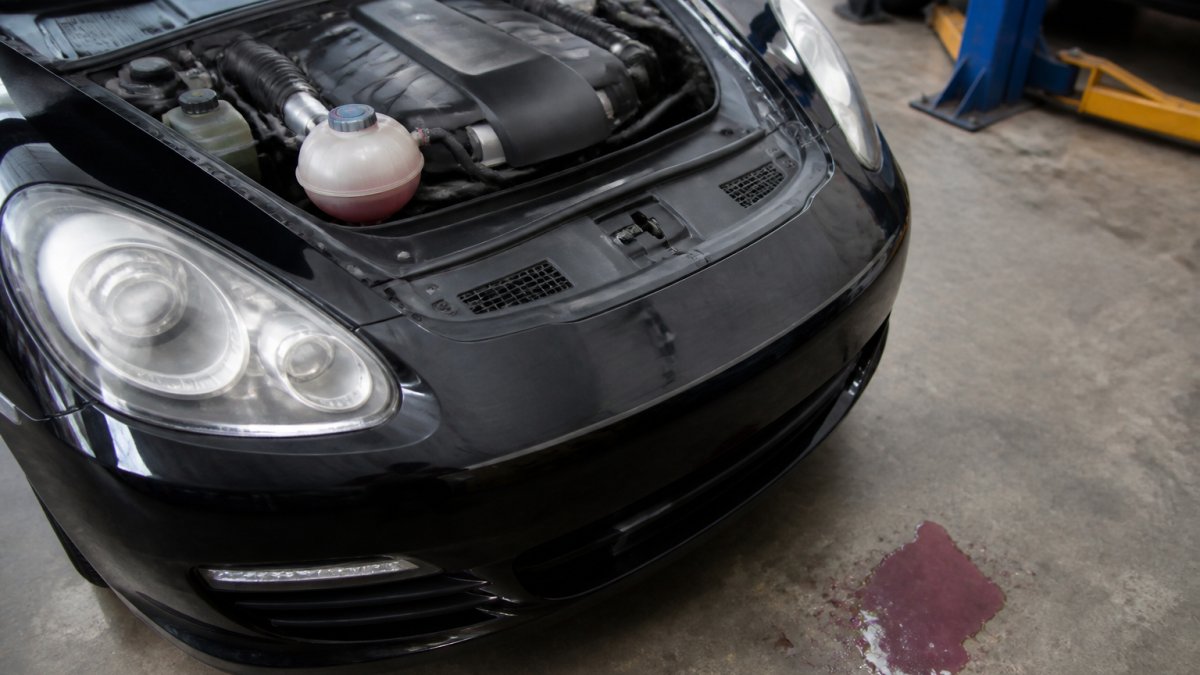
A coolant leak is the loss of the antifreeze-and-water mixture that keeps your engine at a safe operating temperature.
The key point most guides skip: the symptom tells you how fast you are losing coolant, not where it is going. A puddle points outside the engine; a dropping level with no puddle points inside.
Puddles, Residue, and the Sweet Smell of Antifreeze
Coolant puddles are the most visible sign, usually forming near the front of the car.
The smell is just as telling. Antifreeze has a sweet, syrupy odor that lingers after shutdown. Catching it near the front grille or wheel wells usually means an external leak.
Where to look first:
- Under the radiator and lower radiator hose
- Around the water pump and thermostat housing
- At the coolant expansion tank seams and cap
A small puddle is not harmless. Coolant loss adds up, and a slow leak can become an overheating event on a long drive.
Temperature Gauge Behavior and Coolant Level Drops
A rising temperature gauge is a warning you should never ignore. Normal Panamera coolant temperature sits mid-gauge; if the needle climbs past center and keeps going, the cooling system is losing its ability to control heat.
Watch for these patterns:
- The gauge rises in stop-and-go traffic, then drops on the highway
- The coolant warning light comes on, then disappears
- You top up the expansion tank and it drops again within days
That last one matters most. The NHTSA guidance on engine overheating and safety notes that overheating can lead to sudden power loss and engine damage, so treat repeated top-ups as a real problem, not a quirk.
Porsche Panamera Coolant Leak Causes: Where the Failure Usually Starts
Coolant leaks almost always trace back to a seal, hose, or gasket that has aged out. Heat cycles, pressure, and time wear these parts down, and the Panamera's tight engine bay makes some harder to reach, so diagnose before replacing parts.
External Leak Sources: Hoses, Water Pump, Thermostat Housing
External leaks are the ones you can usually see. The cooling system runs under pressure, so any weak point pushes coolant out when hot.
The usual suspects:
- Radiator hoses and coolant hoses that have gone soft, cracked, or swollen
- Water pump seals and bearings that weep coolant from the weep hole
- Thermostat housing gaskets that harden and stop sealing
Hose failure is the most common starting point. Rubber does not last forever, and a hose that looks fine cold can leak once it heats and expands.
Internal Coolant Loss: Head Gaskets and Engine Oil Cooler
Internal coolant loss is harder to spot because there is no puddle. Coolant disappears into the engine or the oil system instead of hitting the ground.
Signs of internal loss include:
- A dropping coolant level with no visible leak
- White, sweet-smelling exhaust smoke
- Milky or frothy engine oil
A failing head gasket or cracked engine oil cooler can both cause this. Internal loss is serious: coolant in the oil strips lubrication and can damage bearings fast. If you suspect it, stop driving.
Porsche Coolant Leak Diagnosis: A Step-by-Step Owner Inspection
You can narrow down a Porsche coolant leak diagnosis at home with a few basic checks. Do them with the engine completely cold, and never open the expansion tank cap while hot, pressurized coolant can spray and burn you.
What you'll need: a flashlight, clean paper towels, a small mirror, and a cold engine.
- Park on clean cardboard overnight. Any new spots in the morning show the drip location.
- Check the coolant level in the expansion tank against the cold-fill mark.
- Trace the residue. Follow white or crusty trails upward to their source.
- Inspect the hoses. Squeeze them gently. Soft, cracked, or swollen hoses need replacing.
- Look at the water pump weep hole for fresh coolant or dried residue.
- Check the oil. Milky oil or a sweet smell points to internal loss.
- Pressure test if you can. A cooling system pressure test holds pressure and reveals seeps that only show under load.
How to Tell External Leaks From Internal Coolant Loss
The fastest way to tell them apart is the puddle test: an external leak leaves evidence on the ground or engine, while an internal leak leaves none but the level still drops.
Use this to sort it out:
| What You See | Leak Type | Likely Cause |
|---|---|---|
| Puddle under front of car | External | Hose, radiator, or water pump |
| White residue on engine | External | Seeping gasket or fitting |
| Level drops, no puddle | Internal | Head gasket or oil cooler |
| Milky oil or sweet exhaust | Internal | Coolant mixing with oil |
| Gauge climbs, level low | Either | Confirm with a pressure test |
Panamera Symptoms by Model Year, Engine, and Trim
Leak symptoms vary by Panamera generation, engine, and trim, following how much heat each variant produces, how many plastic and rubber components sit in the cooling path, and how many heat cycles the car has seen. Here is what owners report.
First-generation 970 (2010-2016)
The 970 Panamera is now old enough that age-related failures dominate. Most reported symptoms:
- Coolant smell after shutdown from the expansion tank cap or the tank seam, often the first sign owners notice.
- Slow drips at the water pump weep hole, which show up as dried pink or orange crust below the front of the engine.
- Weeping thermostat housing gaskets, which harden and stop sealing as the plastic ages.
V8 models run hotter under load than the V6, so their hoses and plastic housings tend to fail earlier in mileage terms.
Second-generation 971 (2017-2023)
The 971 improved cooling-system packaging but did not eliminate wear items. Owners most often report:
- Coolant level dropping without a visible puddle, which usually points to a slow seep at a plastic fitting or the oil cooler circuit rather than a burst hose.
- Residue around the expansion tank and its cap, especially on cars that see short trips and repeated heat cycles.
- Water pump seepage at higher mileage, still a wear item regardless of generation.
Because the 971 engine bay is tightly packaged, some leaks are harder to see from above. A pressure test often finds what a visual inspection misses.
Turbo, Turbo S, and other high-output trims
Higher-output V8 and turbocharged variants produce more heat, stressing every seal, hose, and cooler. Owners of these trims more often report:
- Multiple small seeps at once rather than one obvious failure.
- Oil cooler circuit seeps, because the cooler works harder and its lines and fittings see more thermal cycling.
- Faster coolant loss under sustained load, such as long highway pulls or track use, because system pressure and temperature both rise.
What mileage tells you
A useful rule of thumb: rubber hoses and plastic housings commonly begin showing age-related seepage in the 60,000-100,000 mile range, and earlier on cars with frequent short trips or high underhood temperatures. A higher-mileage or higher-output Panamera deserves a closer look at every hose, seal, and plastic housing, not just the one dripping.
The takeaway is simple. Age and heat drive these failures, and the variant tells you which components to inspect first.
Porsche Panamera Coolant Leak Repair Cost: What Drives the Estimate
There is no single price for a Porsche Panamera coolant leak repair. The estimate depends on the failed part, how deep it sits in the engine bay, and the labor to reach it, but the relative magnitudes are predictable, and knowing them helps you sanity-check any quote.
Cost factors, from cheapest to most expensive
- Diagnosis. A cooling-system pressure test or a UV dye test is the smallest line item. It is also the one that most often saves money, because it tells the technician which part is actually leaking instead of guessing.
- Hoses and clamps. The least expensive repair. A hose is an inexpensive part, and most are reachable without major disassembly.
- Thermostat housing and gasket. Moderate. The part is not costly, but reaching it can require removing surrounding components.
Why labor, not parts, usually dominates
The Panamera's tightly packaged engine bay is the main reason. A cheap part can still produce a large bill if reaching it requires removing the intake, front engine cover, or other components. Two cars with the same failed part can get very different quotes depending on engine and trim.
How to keep the number down
- Diagnose before you replace. Replacing parts by guesswork is the fastest way to pay for the same job twice.
- Fix the root cause, not just the drip. A seeping water pump often means the surrounding hoses and seals are the same age and close behind.
- Use genuine OEM parts. Aftermarket components can fit poorly and fail early, which means paying labor twice for the same repair.
We do not publish fixed prices because they change with the part, shop, and your model year and trim. For current pricing on genuine Porsche components, check our catalog directly. The real money saver is fixing the right part the first time.
Can You Drive a Panamera With a Coolant Leak? Overheating Response
You can drive a short distance with a slow external leak if you watch the gauge and top up. Do not drive if the temperature climbs, the warning light comes on, or you suspect internal loss.
If the gauge starts rising, do this:
- Turn off the air conditioning and turn on the heater to pull heat from the engine.
- Pull over safely as soon as you can.
- Shut the engine off and let it cool completely.
- Do not open the cap while hot.
- Add coolant only once the system is cold, or call for a tow.
The EPA information on antifreeze and proper disposal reminds owners that used coolant is toxic and must be disposed of properly, so catch drips rather than letting them run into drains.
Prevention and Post-Repair Verification With Genuine OEM Parts
Prevention comes down to two habits: regular checks and correct parts. Inspect hoses, the expansion tank, and the water pump area at every oil change, and replace worn hoses before they fail.
After a repair, verify the fix:
- Recheck the coolant level over the first week
- Watch the temperature gauge on the first few drives
- Look for new residue or puddles
Using OEM replacement parts matters here. Aftermarket parts can fit poorly and fail early, meaning you pay for the same job twice.
For more on how automakers design cooling systems to manage heat, see SAE International resources on vehicle thermal management.
Frequently Asked Questions
How much does it cost to repair a coolant leak in a Porsche Panamera?
Repair cost depends on the leaking component and labor access. A hose or clamp replacement sits at the lower end, while a water pump, thermostat housing, or engine oil cooler reseal costs more because more of the engine bay has to come apart. Internal leaks involving head gaskets are the most expensive. Get a written estimate that lists the failed part, labor hours, and whether genuine OEM replacement parts are included. Pricing for OEM components varies by model year and engine, so check current pricing on the European OEM Parts site.
What does Porsche coolant smell or look like when it leaks?
Porsche coolant typically has a sweet, syrupy odor that becomes noticeable near the front of the car or through the vents after the engine warms up. Fresh coolant usually appears as a pink or orange fluid, and dried coolant leaves a chalky white or crusty residue around hose connections, the water pump, and the expansion tank. If you see wet spots under the front of the car after it sits overnight, that is a strong sign of an external coolant leak.
Can I drive a Porsche Panamera with a coolant leak?
Only if the leak is minor and the coolant level stays within range, and even then you should drive directly to a repair shop. If the temperature gauge climbs above normal, the coolant warning light comes on, or you see steam, pull over and shut the engine off. Continuing to drive with high engine temperature can warp cylinder heads and damage the engine, turning a manageable repair into a major one.
How is a coolant leak diagnosed on a Porsche Panamera?
Diagnosis starts with a visual inspection of the engine bay, hoses, radiator, and expansion tank for wet spots or dried coolant residue. A pressure test then pressurizes the cooling system to reveal seeps that only appear under load. A mechanic may also use a dye test and check the engine oil and exhaust for signs of internal coolant loss. If the leak source is unclear, a pressure test is the fastest way to narrow down the leaking component.
What are the common causes of a Porsche Panamera engine overheating?
Overheating usually traces back to coolant loss from a failed hose, water pump, thermostat housing, or radiator. A stuck thermostat can also block coolant circulation, and a faulty temperature sensor can give false readings. In some cases, internal coolant loss through a head gasket or engine oil cooler raises engine temperature without visible puddles. If the temperature gauge rises quickly, stop driving and have the cooling system pressure tested before replacing parts.
A coolant leak rarely fixes itself, and small drips grow into overheating events that can damage your engine. Fixing it right starts with the correct part. EUROPEAN OEM PARTS offers genuine Porsche components, expert help identifying the right part for your Panamera, and fast nationwide shipping. Get started with EUROPEAN OEM PARTS and keep your Panamera running at factory standards.