

Best Volkswagen Engine Oil Filter Brands
Table of Contents
- What Makes a Quality Volkswagen Oil Filter
- OEM vs Aftermarket Oil Filters for Volkswagen Engines
- Top Volkswagen Oil Filter Brands and Their Strengths
- Genuine Volkswagen Parts for Sale: Where to Source Filters
- Volkswagen Oil Change Intervals and Filter Selection
- How to Identify Counterfeit and Avoid Poor-Quality Filters
- Conclusion
Last Updated: August 30, 2026
What Makes a Quality Volkswagen Oil Filter
A quality Volkswagen oil filter protects your engine's lubrication system by removing contaminants before they damage critical components. The best filters combine effective filtration media, proper flow rates, and structural integrity to keep your engine running smoothly across thousands of miles.
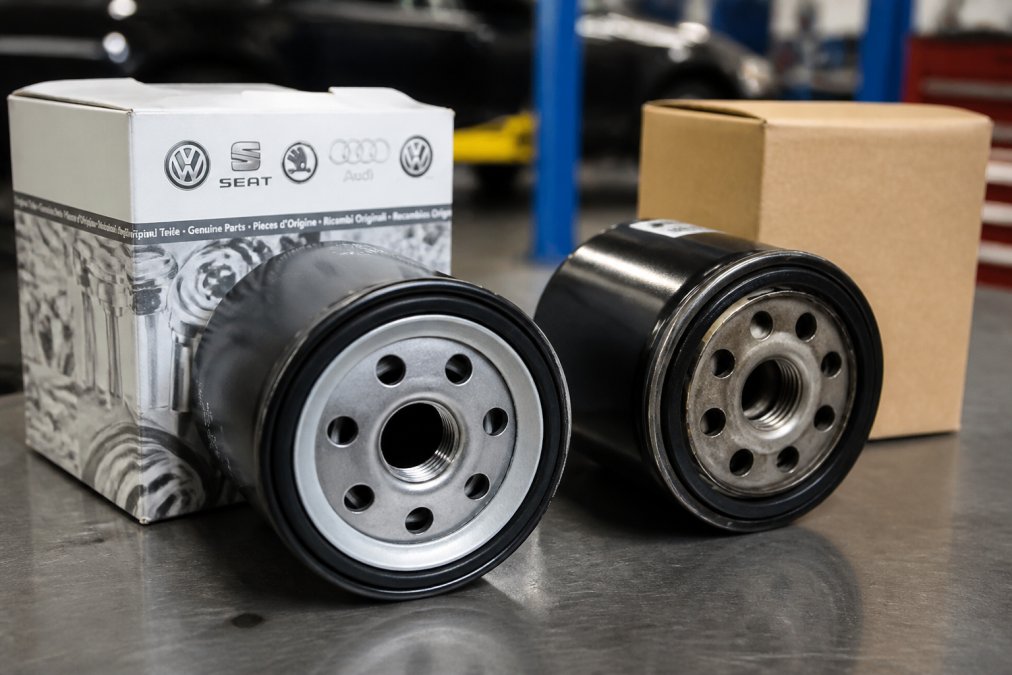
Volkswagen engines demand precision engineering in every component, including filters. The difference between a mediocre filter and a quality one becomes obvious over time: engines with poor filtration accumulate sludge faster, experience higher wear rates, and require more frequent maintenance.
At EUROPEAN OEM PARTS, we understand that Volkswagen owners expect reliability. That's why we focus exclusively on genuine OEM components and verified aftermarket alternatives that meet strict performance standards. A quality filter must handle your vehicle's specific viscosity requirements, match the micron rating your engine needs, and maintain structural integrity under varying pressure conditions.
The filtration media itself matters significantly. Cellulose-based media is common in traditional filters, while synthetic media offers superior dirt-holding capacity and thermal stability. High-quality filters also feature an anti-drain back valve that prevents oil from draining out of the filter when your engine is off, ensuring immediate lubrication when you start your vehicle.
Housing integrity is critical. The base plate must seal properly to the engine block, the center tube must withstand pressure changes, and the gasket seal must remain flexible across temperature extremes. Poor-quality filters develop leaks or fail to seal completely, allowing unfiltered oil to bypass the media entirely.
OEM vs Aftermarket Oil Filters for Volkswagen Engines
The choice between OEM and aftermarket filters shapes your maintenance strategy. Each option has legitimate advantages depending on your priorities, vehicle age, and driving patterns.
Why OEM filters dominate performance specifications
Genuine Volkswagen filters are engineered to exact specifications for your specific engine model. OEM filters undergo rigorous testing to ensure they handle your engine's pressure relief requirements, flow rates, and filtration efficiency. They typically feature superior gasket materials that maintain seal integrity across the full temperature range your engine experiences, with tighter tolerances meaning less variation between units.
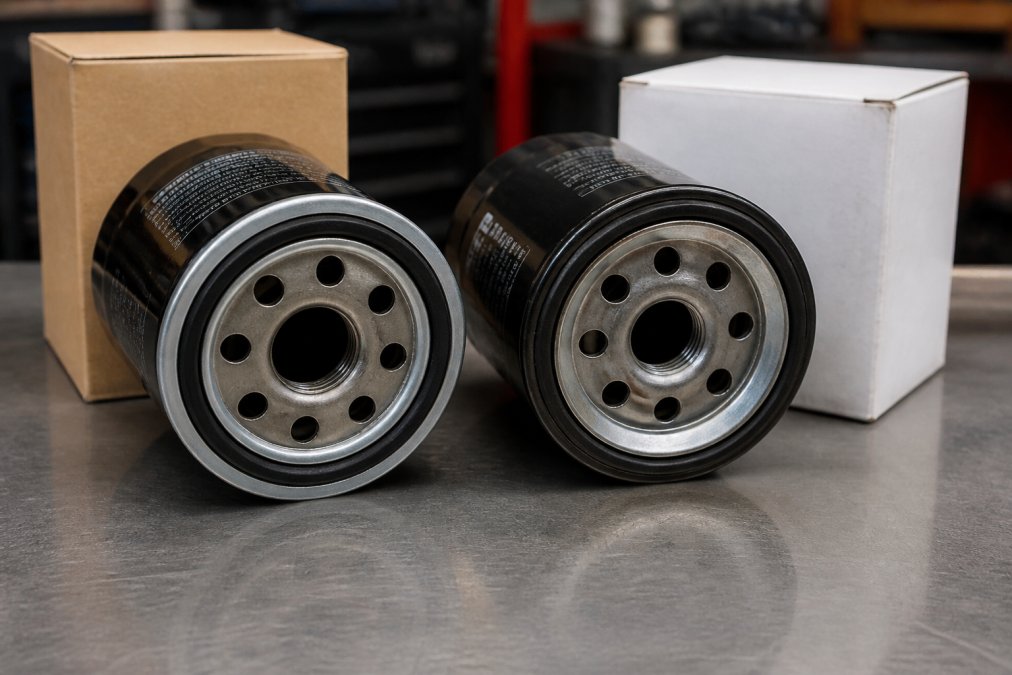
OEM filters integrate seamlessly with your vehicle's maintenance records and strengthen warranty coverage and resale value. For vehicles still under warranty, OEM filters are often the only option that preserves manufacturer protection. The trade-off is cost, genuine Volkswagen filters carry higher prices than many aftermarket alternatives, though that premium reflects engineering precision and quality control that directly impacts engine health.
When aftermarket filters make sense
Aftermarket filters offer value when you select brands that publish their specifications: micron rating, flow rate, pressure relief settings, and filtration efficiency percentages. Filters from manufacturers with decades of automotive experience often perform nearly identically to OEM equivalents.
Aftermarket filters make particular sense for older Volkswagen models where OEM parts have become difficult to source. The key distinction is quality tier: premium aftermarket filters from established manufacturers perform reliably, while budget filters from unknown suppliers introduce risk. You're buying the manufacturer's quality control and engineering standards.
Top Volkswagen Oil Filter Brands and Their Strengths
Bosch filters are widely recognized for engineering excellence. They typically feature strong construction, reliable anti-drain back valves, and consistent performance across temperature ranges.
Mann-Filter specializes exclusively in filtration products and produces OEM filters for Volkswagen. Their aftermarket filters maintain the same engineering standards as OEM equivalents, making them an excellent choice for value-conscious owners.
Mahle is another OEM supplier for Volkswagen with a reputation for precision manufacturing. Their filters are engineered for exact fit and performance specifications with high-quality media and pressure relief valves calibrated for specific engine requirements.
Fram offers filters across a wide price range. Their premium filters deliver solid performance, though their economy options sacrifice some durability.
Mobil 1 filters combine quality engineering with synthetic oil compatibility, making them ideal if you've switched to synthetic lubrication for extended drain intervals.
EUROPEAN OEM PARTS stocks genuine Volkswagen filters alongside verified aftermarket options from these manufacturers. Our team helps you identify which filter matches your specific vehicle model, oil type, and maintenance approach.
Genuine Volkswagen Parts for Sale: Where to Source Filters
Finding authentic Volkswagen filters requires knowing where to look. Dealerships carry genuine parts but charge premium prices. Online retailers specializing in European components offer better pricing while maintaining authenticity guarantees.
EUROPEAN OEM PARTS provides a curated selection of genuine Volkswagen filters and quality aftermarket alternatives with fast shipping and straightforward part identification. Our team helps you confirm that the filter you're purchasing matches your vehicle's specifications, a critical step that prevents costly mistakes.
Authentic sourcing matters because counterfeit filters circulate in online marketplaces. A counterfeit filter might look similar to genuine parts but lacks the engineering precision and quality control that protects your engine. Specialized retailers like EUROPEAN OEM PARTS maintain broader inventory, offer competitive pricing, and provide expertise in part compatibility.
Volkswagen Oil Change Intervals and Filter Selection
Your filter choice must align with both your oil change interval strategy and your climate conditions.
Standard versus extended drain intervals
Traditional oil change intervals, typically every 5,000 to 7,500 miles, pair well with any quality filter from an established manufacturer. Extended drain intervals, often 10,000 miles or longer with synthetic oils, demand filters with superior dirt-holding capacity and thermal stability (castrol.com). Check the filter packaging for explicit language like "rated for extended drain intervals" or "compatible with 10,000+ mile service schedules." Filters not rated for extended intervals will reach maximum dirt capacity before your scheduled oil change, potentially allowing unfiltered oil to bypass the media.
Synthetic oils enable extended intervals because they resist oxidation and thermal breakdown better than conventional mineral oils. However, your filter must be engineered to work with synthetic oil's different viscosity characteristics. Premium filters from Mann-Filter, Mahle, and Bosch all produce filters specifically optimized for synthetic oil extended intervals, featuring enhanced media with greater surface area and anti-drain back valves calibrated for synthetic oil viscosity.
Your vehicle's owner's manual specifies the recommended interval for your particular model and engine. If your manual recommends extended intervals, your filter must support that schedule. Pairing a standard-duty filter with extended drain intervals creates unnecessary risk of inadequate filtration and potential engine sludge accumulation.
Cold weather filter performance and flow rates
Cold weather performance is essential for Volkswagen owners in northern climates. When ambient temperature drops below 32°F, conventional mineral oil becomes significantly more viscous, restricting flow through the filter media. Your filter must maintain adequate flow rates even when oil is cold, or your engine won't receive proper lubrication during the critical first seconds after starting.
Premium filters are tested at 0°F or colder to ensure they maintain minimum flow rates (sae.org). Winter driving in northern climates demands filters engineered for cold-start conditions. Look for filters rated for operation at 0°F or lower. Synthetic oils are particularly important in cold climates because they maintain better flow characteristics at low temperatures than conventional oils.
The anti-drain back valve becomes especially important in cold weather. This valve prevents oil from draining out of the filter when your engine is off. In cold climates, if oil drains from the filter overnight, your engine starts with an empty filter and no oil pressure until the new oil reaches the filter media. Premium filters feature anti-drain back valves with materials that remain flexible at low temperatures; budget filters sometimes use materials that become brittle in extreme cold, losing their sealing ability.
Filter specifications for long-life oil intervals
If you're using full synthetic oil with extended drain intervals, choose filters explicitly rated for that application. Key specifications to verify include:
Micron rating: Standard filters typically use 25-micron media. Extended-interval filters often use 20-micron or finer media to capture smaller contaminants over the longer service period (iso.org).
Filtration surface area: Premium extended-interval filters increase the total surface area of the media (sometimes 30-50% more than standard filters) to accommodate additional contaminants accumulated over extended service periods.
Dirt capacity: Extended-interval filters typically have 40-60% higher dirt capacity than standard filters. This specification should be listed on the filter packaging.
Bypass valve pressure setting: For extended intervals, the bypass valve should be set slightly higher than standard filters (often 12-14 PSI instead of 10-12 PSI) to prevent premature opening as the media accumulates contaminants.
Mann-Filter and Mahle both publish detailed specifications for their extended-interval filters. If you're switching to extended drain intervals, verify that your chosen filter is explicitly rated for your specific interval.
Matching filter selection to your maintenance strategy
Your complete maintenance approach should integrate filter selection, oil type, and service interval. If you use conventional mineral oil with standard 5,000-mile intervals, a quality aftermarket filter from an established manufacturer is sufficient and cost-effective. If you've switched to synthetic oil with extended 10,000-mile intervals, invest in a premium filter rated for extended service. If you live in a cold climate, prioritize filters with proven cold-weather performance ratings.
How to Identify Counterfeit and Avoid Poor-Quality Filters
Counterfeit filters represent a genuine risk in online marketplaces. Knowing what to inspect helps you verify authenticity before installation and protects your engine from substandard filtration.
Visual and structural inspection points
Genuine Volkswagen filters display crisp, consistent printing on all surfaces. Examine the text under bright light: authentic filters show uniform font weight, consistent letter spacing, and sharp edges on all characters. Counterfeit filters often display blurry text, inconsistent font sizing, or misspelled technical terms.
The base plate is where manufacturing quality becomes obvious. Genuine base plates show clean, precise machining with smooth threading where the filter screws onto the engine block. Run your finger along the threads: they should feel uniform and smooth. Counterfeit base plates often display rough casting marks, uneven threading, or visible tool marks from poor machining.
Inspect the gasket seal itself carefully. Genuine gaskets are uniform in thickness (typically 3-4 mm) with consistent material color throughout. The rubber should feel slightly tacky and flexible, not hardened or brittle. Press gently on the gasket; it should compress slightly and return to shape.
The anti-drain back valve should move freely when you gently press it from inside the filter opening. It should return to its resting position smoothly without sticking. The center tube should be perfectly straight with no dents, deformation, or visible welding defects. The welds connecting the center tube to the base plate should be clean and uniform.
Packaging and sourcing red flags
Genuine Volkswagen filter boxes display clear branding with the VW logo rendered precisely. The box should include complete technical specifications: micron rating, flow rate, pressure relief valve setting, and compatibility information. Counterfeit packaging frequently omits these specifications or lists vague information.
Be cautious of prices that seem unusually low. Genuine OEM filters have consistent pricing across reputable retailers within a narrow range (typically $8-$18 depending on model). Prices 40-50% below market rates almost always indicate counterfeit stock.
Purchase from sellers with substantial transaction history (500+ sales), high ratings (4.5+ stars), and clear return policies. Established retailers specializing in European automotive components maintain sourcing relationships with manufacturers and can verify authenticity through their supply chain.
Verification before purchase
Contact the seller before purchasing if anything seems unclear. Reputable retailers can confirm the exact filter model, provide the complete part number, and verify compatibility with your specific vehicle year, engine size, and oil type. Request photos of the actual filter you're purchasing, not just stock images. Legitimate sellers are usually willing to provide additional photos because they're confident in their product authenticity.
Check the seller's return policy explicitly. Reputable retailers stand behind their products with straightforward returns, typically 30 days, no questions asked. If a seller requires you to prove the filter is defective, charges restocking fees, or makes returns difficult, that's a red flag.
Post-purchase verification
When your filter arrives, inspect it immediately using the construction quality checks above before installation. Do not install a filter you're uncertain about; the cost of a replacement filter is trivial compared to potential engine damage from poor filtration.
Used oil filters contain residual oil and should never enter regular trash streams. Many retailers, including specialized European parts suppliers, accept used filters for proper recycling. When you source your replacement filter from a reputable retailer, ask about their used filter recycling program, most established suppliers offer this service.
Frequently Asked Questions
Q: Who makes genuine VW oil filters?
A: Volkswagen manufactures OEM oil filters through its parts division, sold under the VW brand. Major suppliers also produce filters meeting Volkswagen's engineering specifications for distribution through authorized dealers and parts retailers. When sourcing genuine Volkswagen parts for sale, verify the filter carries official VW branding and part numbers to confirm authenticity. Counterfeit filters often have poor print quality, loose housing, or incorrect gasket materials.
Q: Are OEM oil filters better than aftermarket options?
A: OEM filters are engineered to exact Volkswagen specifications for your engine model, offering superior gasket seals, anti-drain back valve performance, and filtration media quality. They match your vehicle's pressure relief settings and flow rate requirements precisely. Aftermarket filters vary widely in quality; some meet OEM standards, while others sacrifice filtration efficiency or seal integrity to reduce costs. For extended drain intervals and synthetic oil compatibility, OEM filters can provide better long-term wear protection.
Q: How often should you change your Volkswagen oil filter?
A: Standard Volkswagen oil change intervals typically range from 5,000 to 10,000 miles, depending on your model year and engine type. Synthetic oil allows extended drain intervals up to 15,000 miles on some newer models. Always consult your owner's manual for your specific vehicle's maintenance schedule. The filter should be replaced at every oil change to prevent particulate matter accumulation and maintain proper lubrication system pressure.
Q: What should Volkswagen owners avoid in oil filters?
A: Avoid filters with weak gasket seals that can leak, poor-quality cellulose media that tears under pressure, or bypass valves that fail under cold startup conditions. Counterfeit filters often have thin metal housings that dent easily, incorrect micron ratings that allow contaminant capacity to suffer, or spring tension issues affecting anti-drain back valve function. Always purchase from authorized retailers to ensure housing integrity and thermal stability matching your engine's specifications.
This article was written using GrandRanker