

Genuine Porsche 911 Suspension Parts Shop
Table of Contents
- Why Genuine Porsche 911 Suspension Parts Matter
- OEM vs. Aftermarket Porsche Suspension Parts
- Core Suspension Components for Your 911
- How to Identify Genuine Porsche Suspension Parts
- Porsche 911 Suspension Replacement Cost Breakdown
- Signs Your Suspension Needs Attention
- Shopping for Suspension Parts Online
- Conclusion
Last Updated: August 29, 2026
Why Genuine Porsche 911 Suspension Parts Matter
The difference between genuine Porsche 911 suspension parts and aftermarket alternatives comes down to precision engineering and long-term reliability. Your 911's suspension is the foundation of handling dynamics, safety, and the driving experience that makes the car worth owning.

Genuine OEM components are engineered to exact factory specifications for your specific 911 model, accounting for weight distribution, chassis stiffness, and how Porsche calibrated every system to work together. When you replace a strut, control arm, or ball joint with a genuine part, you're restoring the car to its original performance envelope.
Mixing aftermarket parts with OEM components creates misalignment problems. Your suspension geometry, dampening adjustment, and handling precision all depend on parts working as an integrated system. A cheaper control arm or sway bar end link introduces variables the rest of your suspension wasn't designed to accommodate.
Owners who stick with genuine components consistently report better ride quality, more predictable handling, and fewer surprises down the road. The cost difference is real, but so is the peace of mind that comes with knowing your 911 runs on parts Porsche engineered specifically for your model.
OEM vs. Aftermarket Porsche Suspension Parts
Genuine OEM suspension parts carry Porsche's engineering and quality control (porsche.com). Aftermarket alternatives often cost less upfront but introduce trade-offs that compound over time.
Genuine OEM parts are manufactured to exact factory tolerances and match your 911's suspension geometry perfectly. Ball joints, control arm bushings, and sway bar end links are calibrated to work within Porsche's design parameters. When you install a genuine strut assembly, the dampening curve, spring rate, and valving are tuned for your specific model year and configuration.
Aftermarket parts vary widely in quality. Some match OEM specs closely, while others cut corners on materials, tolerances, or damping characteristics to hit a lower price point. The problem isn't that they're inherently bad, it's that mixing them with OEM components creates inconsistency in your suspension system.
Consider replacing a worn control arm with an aftermarket unit that's slightly stiffer. Your OEM sway bar, designed to work with the original control arm compliance, now behaves differently. Your bump steer characteristics change, ride height shifts, and wheel alignment drifts out of spec. What seemed like a cost-saving move cascades into handling issues and accelerated wear on other components.
Genuine Porsche 911 suspension parts eliminate this guesswork. They integrate seamlessly with every other suspension element. For owners who plan to keep their 911 long-term or use their car for track days, the consistency and reliability of OEM parts justify the investment.
A genuine ball stud from EUROPEAN OEM PARTS costs just $1.00, but a full suspension overhaul with genuine parts runs significantly higher. However, repeatedly replacing failed aftermarket parts or dealing with handling problems that require alignment corrections often costs more in the long run.
Core Suspension Components for Your 911
Your Porsche 911's suspension relies on several key components working in concert. Understanding what each one does helps you recognize when replacement is necessary and why genuine parts matter.
Shocks and Struts
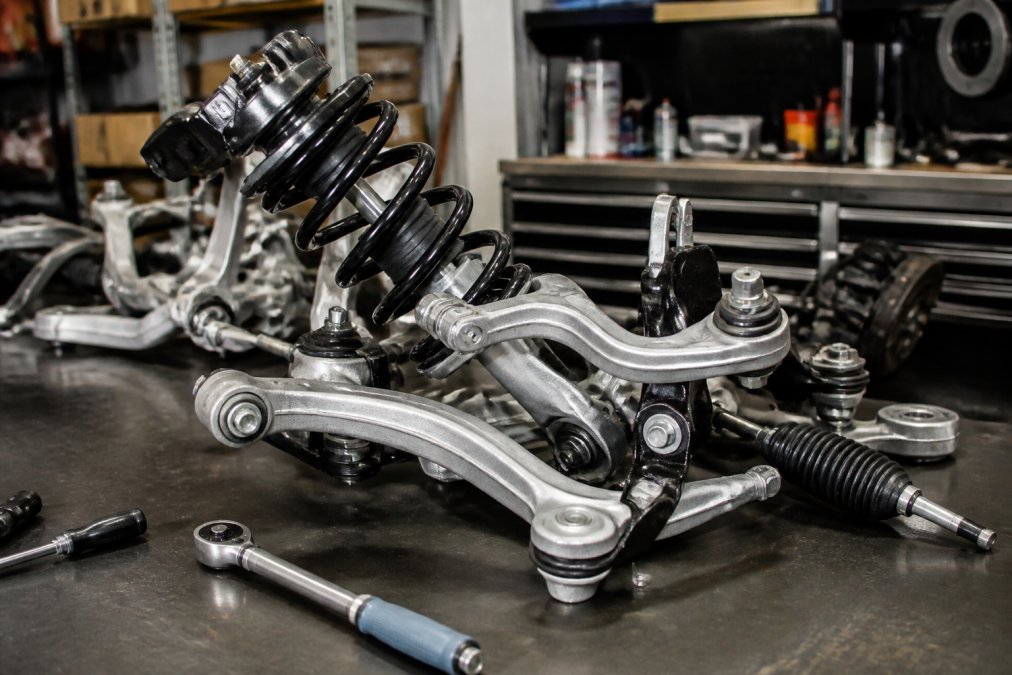
Shocks and struts are the dampening backbone of your suspension, controlling how quickly your springs compress and extend. On a Porsche 911, strut assemblies combine the shock absorber, spring, and mounting hardware into a single integrated unit.
Genuine Porsche strut assemblies are tuned for your 911's weight distribution and handling characteristics. The damper valving is calibrated to provide the right amount of resistance across the full range of suspension travel. Replace a strut with an aftermarket unit that has different damping curves, and your suspension geometry changes, the car sits differently, handling dynamics shift, and what felt planted becomes either too soft or too harsh.
Strut replacement typically involves both front and rear. The process requires precise alignment afterward to restore your 911 to factory specifications. EUROPEAN OEM PARTS stocks genuine strut assemblies matched to your specific model year, ensuring proper suspension geometry.
Control Arms and Ball Joints
Control arms connect your wheel hub to the chassis, maintaining proper suspension geometry as the wheel moves up and down. Ball joints are the pivot points that allow the control arm to rotate. Both are critical to handling precision and ride quality.
Worn ball joints are one of the most common suspension issues on older 911 models, causing increased steering play, clunking sounds when turning, or vague steering response (peer-reviewed research). A worn ball stud allows excessive movement, throwing off your suspension geometry and wheel alignment.
Genuine Porsche control arms and ball joints maintain precise geometry throughout the suspension's range of motion. The control arm bushings are calibrated to provide the right balance of compliance and stiffness. Replace them with aftermarket parts that have different bushing characteristics, and you've altered your suspension's fundamental behavior.
Ball studs like the genuine Porsche ball stud (part number 0B1-141-777-A) available from EUROPEAN OEM PARTS are precision-machined components. The taper, diameter, and thread pitch must be exact. A slightly oversized or undersized stud creates fitment problems or premature wear.
Sway Bars and Links
Sway bars reduce body roll during cornering by transferring load between the left and right sides of the suspension (sae.org). Sway bar end links connect the bar to the control arms, transmitting that load transfer to the wheels.
Genuine Porsche sway bar end links are engineered to the exact stiffness and geometry your 911 needs. The ball joints at each end must have precise tolerances. Worn end links allow excessive play, reducing your car's cornering precision and creating clunking noises over bumps.
A worn sway bar end link degrades handling noticeably. Your 911 will feel less responsive in turns and less connected to the road. Replacing them with genuine parts restores the original handling dynamics.
How to Identify Genuine Porsche Suspension Parts
Distinguishing genuine Porsche 911 suspension parts from counterfeits or misrepresented aftermarket components requires attention to specific details.
Part number verification is your first line of defense. Every genuine Porsche component carries a specific part number. Before purchasing, verify the part number matches your 911's model year and configuration. If a seller can't provide a part number or it doesn't match your research, move on.
Packaging and documentation matter. Genuine Porsche parts come in branded packaging with clear labeling, part number, description, and manufacturing details. Counterfeit parts often arrive in generic packaging with vague labeling or missing information.
Fitment guarantee is a practical safeguard. Reputable suppliers like EUROPEAN OEM PARTS verify that every part is correct for your specific model before shipping and stand behind fitment with a clear guarantee. Many online retailers offer no such assurance.
Manufacturing marks on the component itself tell a story. Genuine Porsche parts show clean machining, proper surface finish, and clear markings. Counterfeit or low-quality aftermarket parts often show rough edges, inconsistent finishes, or missing manufacturer stamps.
Sourcing from authorized retailers eliminates most verification headaches. EUROPEAN OEM PARTS sources directly from Porsche suppliers, ensuring every component is authentic and avoiding the risk of counterfeit parts or misidentified components.
Porsche 911 Suspension Replacement Cost Breakdown
Suspension work on a Porsche 911 ranges from simple component replacement to comprehensive overhauls.
Individual component replacement is the most common approach. A single ball joint, sway bar end link, or control arm bushing replacement costs significantly less than a full suspension overhaul. A genuine Porsche ball stud from EUROPEAN OEM PARTS is available for $1.00, making targeted replacement of worn components an affordable maintenance option.
However, labor costs dominate the total expense when you factor in professional installation and wheel alignment. For DIY owners with proper tools and technical knowledge, parts-only costs are the primary expense. For those using a shop, labor typically exceeds parts cost by a significant margin.
A complete suspension overhaul, replacing struts, control arms, ball joints, sway bars, and bushings on both front and rear, represents a more substantial investment. Many owners undertake this work when their 911 has high mileage or shows comprehensive suspension wear. The advantage is restoring the entire suspension system to like-new condition rather than replacing components individually as they fail.
Track-focused owners often invest in performance upgrades alongside OEM replacement, such as coilover conversion kits for adjustable ride height and dampening, or spring plates and sway bar upgrades for increased chassis stiffness. These upgrades complement genuine OEM components, creating a suspension system optimized for your specific use case.
Signs Your Suspension Needs Attention
Recognizing suspension wear early prevents cascading failures and keeps your Porsche 911 safe and responsive.
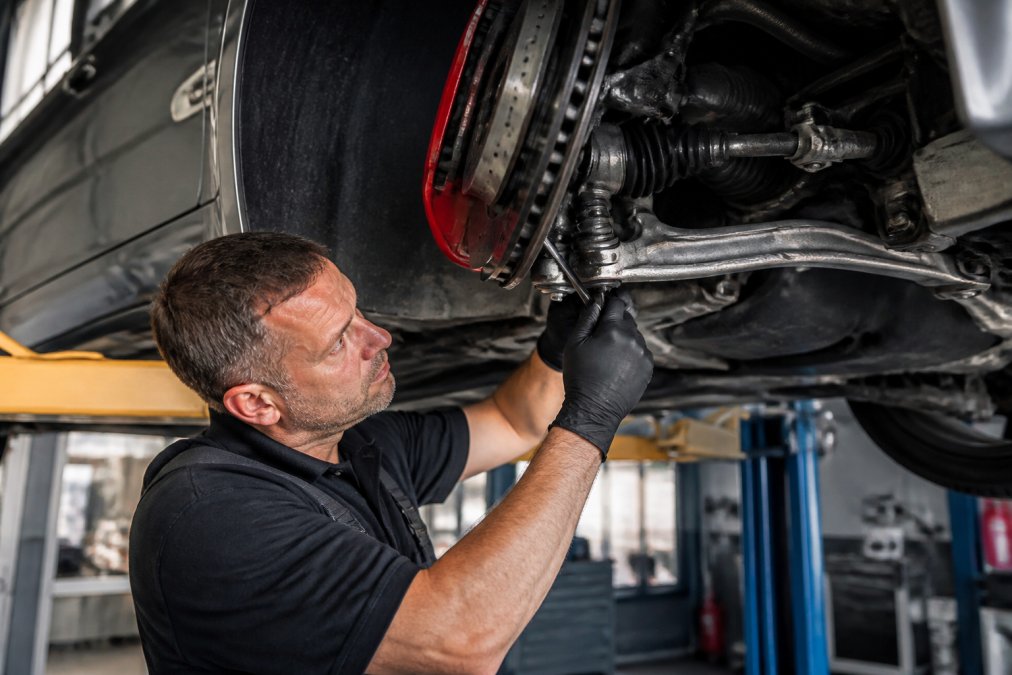
Clunking or knocking sounds over bumps or during turns often indicate worn ball joints or control arm bushings. The sound typically comes from the front end and becomes more pronounced when turning sharply.
Increased steering play or vagueness suggests worn ball joints or sway bar end links. Your steering response feels less direct with noticeable slack before the car responds to steering input. This is a safety concern that warrants immediate attention.
Uneven tire wear can indicate suspension geometry problems caused by worn components. If your tires wear faster on one edge or show a sawtooth pattern, your suspension geometry is out of spec.
Excessive body roll during cornering or a "floating" feeling suggests worn sway bar components or bushings. Your 911 should feel planted and responsive.
Ride quality changes, the car becoming noticeably harsher or softer, can indicate worn struts or damaged springs. Genuine Porsche strut assemblies maintain consistent dampening throughout their service life.
Vibration at highway speeds may point to suspension imbalance or worn components. If felt through the steering wheel, front suspension issues are likely. If felt in the chassis, rear suspension wear may be responsible.
Any of these signs warrant suspension inspection. Many problems compound quickly once they begin. Addressing issues early with genuine Porsche 911 suspension parts prevents more expensive failures down the road.
Shopping for Suspension Parts Online
Buying suspension components online requires confidence that you're getting the right part for your specific 911.
Verify your model and year before searching. Porsche 911 suspension changed significantly across generations. Know your model year, body style, and suspension type from your vehicle registration and owner's manual.
Use part number matching as your primary search method. Once you've identified the correct part number for your 911, search for that specific number. This eliminates confusion and ensures you're comparing genuine components across retailers.
Check fitment guarantees before purchasing. Reputable online retailers like EUROPEAN OEM PARTS verify fitment for your specific model and stand behind their parts with clear guarantees.
Review return policies carefully. Suspension components aren't typically returnable once installed, but you need recourse if a part arrives damaged or doesn't fit despite accurate model information.
Confirm fast shipping and reliable delivery. EUROPEAN OEM PARTS ships nationwide with reliable service, ensuring your parts arrive in good condition and on schedule.
Compare pricing across retailers, but don't chase the lowest price at the expense of authenticity. A genuine Porsche ball stud from a trusted source is worth the investment compared to a questionable alternative.
Maintaining your Porsche 911's suspension with genuine OEM components preserves the driving experience Porsche engineered into your car. Whether you're replacing a single worn ball joint or undertaking a comprehensive suspension overhaul, choosing authentic parts ensures your 911 handles with the precision and reliability it deserves. EUROPEAN OEM PARTS makes sourcing genuine Porsche 911 suspension parts straightforward, with industry expertise, competitive pricing on authentic components, and nationwide shipping to keep your 911 performing at its best. Shop with confidence knowing you're investing in parts designed specifically for your model.
Frequently Asked Questions
How can I verify if a Porsche 911 suspension part is genuine OEM?
Genuine Porsche 911 suspension parts carry authentic part numbers that match factory specifications. Check the part number against your vehicle's documentation or contact the manufacturer directly. Authentic components come with proper packaging, part number verification labels, and documentation from authorized distributors. Avoid sellers who cannot provide part number confirmation or who offer vague descriptions like 'OEM equivalent', genuine parts have exact Porsche part numbers.
What's the difference between OEM and aftermarket Porsche suspension parts?
OEM (Original Equipment Manufacturer) suspension parts are made by Porsche or their authorized suppliers to exact factory specifications and suspension geometry standards. Aftermarket parts are produced by third parties and may vary in quality, fitment, and performance. Genuine OEM parts ensure proper handling dynamics and steering rack alignment. Aftermarket options may be cheaper but often lack the precision engineering and fitment guarantee that protects your vehicle's long-term reliability and resale value.
How often should Porsche 911 suspension components be inspected?
Inspect your Porsche 911 suspension annually or every 12,000 miles, whichever comes first. Check for signs of wear on strut assemblies, control arm bushings, ball joints, and sway bar end links. Professional alignment checks should occur yearly or after any suspension work. Track-ready vehicles or those driven aggressively may need more frequent inspections. Early detection of wear prevents costly damage to other components and maintains proper handling precision and vibration damping.
Does replacing suspension parts require professional wheel alignment?
Yes, most suspension work requires professional wheel alignment afterward. Replacing control arms, ball joints, struts, or sway bars affects your vehicle's suspension geometry and camber adjustment. Improper alignment causes uneven tire wear, poor handling, and potential safety issues. After any suspension component replacement, have a certified technician perform a full alignment to restore factory specifications and ensure optimal steering rack performance and ride height.
This article was written using GrandRanker