

How to Check Audi Brake Fluid Level: Step-by-Step
Table of Contents
- Step 1: Park on Level Ground and Let the Engine Cool
- Step 2: Open the Hood and Locate the Brake Fluid Reservoir
- Step 3: Read the Brake Fluid Level Against the MIN and MAX Marks
- Step 4: How to Add Brake Fluid to an Audi (and When Not To)
- Audi Brake Fluid Type and Specification: What DOT 4 Actually Means
- Audi Brake Fluid Low Warning: What the Light Means and What to Do Next
- Normal Fluid Drop vs. a Leak: When to Stop Driving
- Frequently Asked Questions
Last Updated: October 7, 2026
Step 1: Park on Level Ground and Let the Engine Cool
When you check Audi brake fluid, the job takes about five minutes, and doing it wrong is worse than not doing it at all. A sloped driveway or a warm engine bay gives a false reading every time.
Park on flat, level ground and shut the engine off. The National Highway Traffic Safety Administration safety guidance treats brake fluid loss as a safety defect worth investigating, which is why an accurate cold reading matters more than a quick glance.
Get these ready before you start:
- A clean rag or paper towel
- A bright flashlight or your phone light
- The correct brake fluid for your model
Set the parking brake and chock a wheel on any incline.
Step 2: Open the Hood and Locate the Brake Fluid Reservoir
Pull the hood release inside the cabin, usually under the dash on the driver's side. Lift the hood and secure it with the prop rod or gas strut.
Find the brake fluid reservoir: a small, translucent plastic tank with a screw-on cap, sitting on top of the brake master cylinder bolted to the firewall.
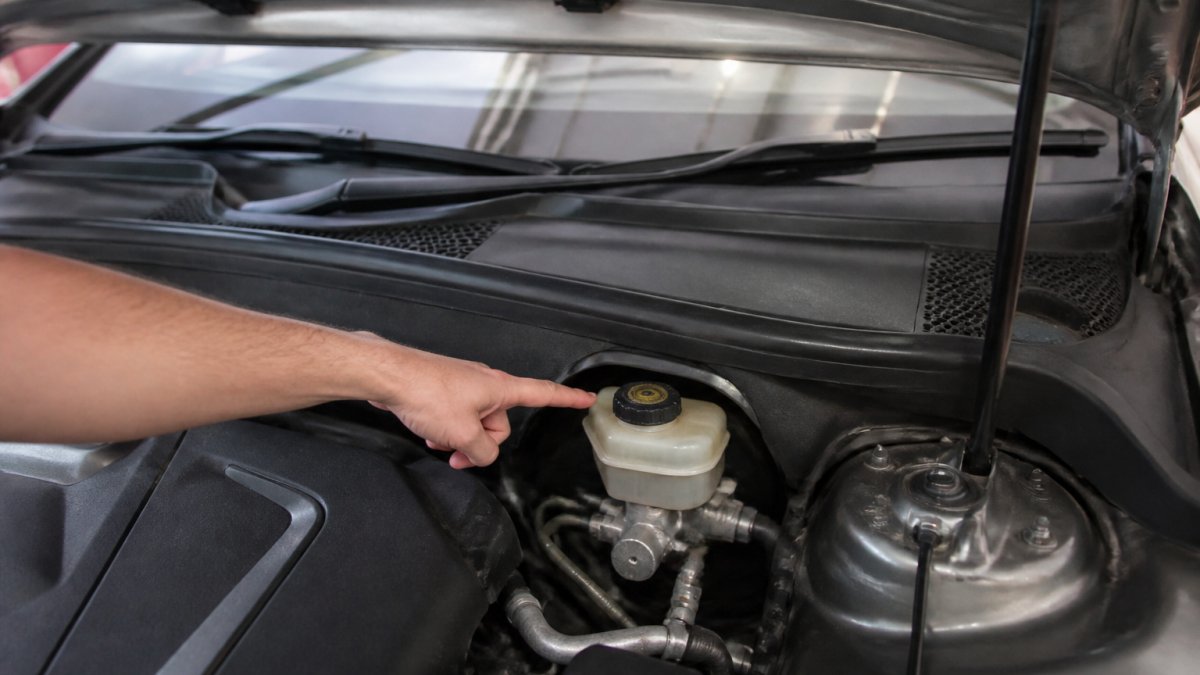
Where the Reservoir Sits on A3, A4, A6, Q5, and Q7 Models
Most modern Audis follow the same layout, but placement shifts by model and year:
| Model | Typical Reservoir Location | Notes |
|---|---|---|
| A3 | Driver's side, near firewall | Small engine bay, easy to spot |
| A4 | Driver's side, rear of engine bay | Often partly hidden by a cover |
| A6 | Driver's side, near firewall | Larger bay, more clearance |
| Q5 | Driver's side, rear corner | Higher mounting point |
| Q7 | Driver's side, near firewall | May sit behind a plastic trim panel |
Year matters too: generations can move the reservoir or cover it with a decorative engine panel. If you cannot find it, check your owner's manual.
Step 3: Read the Brake Fluid Level Against the MIN and MAX Marks
The brake fluid level should sit between the MIN and MAX marks on the side of the reservoir. Above MAX means overfilled; below MIN means low, and low is the one that matters.
Wipe the reservoir with a clean rag so you can see through the plastic, then shine your light along the side. On most Audis the marks are molded into the tank.
A few things to know:
- The level drops slowly as your brake pads wear. That is normal.
- A sudden drop is not normal. That points to a leak.
- Fluid color tells you something too. Fresh fluid is nearly clear. Dark, murky fluid needs replacing.
How to See the Level When the Reservoir Is Cloudy
Age, heat, and grime turn translucent plastic cloudy. Try these fixes:
- Clean the outside with a damp rag and a little soap.
- Use a bright light held flat against the side.
- Rock the car gently and watch for fluid movement inside.
If it stays too cloudy to read, have a shop look at the system. Never top up blind.
Step 4: How to Add Brake Fluid to an Audi (and When Not To)
You can add brake fluid yourself when the level is slightly low and you know why it dropped. Do not add fluid when the level is below MIN, when you see a leak, or when a warning light is on, adding fluid hides the problem.
If you are topping up, here is how to add brake fluid to an Audi:
- Clean the reservoir cap and the area around it. Dirt here ends up in your brake system.
- Open the cap slowly. Brake fluid damages paint, so keep it off the bodywork.
- Add fluid in small amounts using a clean funnel.
- Stop at the MAX mark. Do not overfill.
- Replace the cap and tighten it fully.
- Wipe up any spills right away with water.
Never reuse fluid from an open container. Brake fluid pulls moisture from the air, and wet fluid boils at a lower temperature.
Audi Brake Fluid Type and Specification: What DOT 4 Actually Means
Most Audis call for DOT 4 brake fluid, but "most" is not "yours." Audi has used different specifications across model years and platforms, and the wrong fluid leads to swollen seals, a spongy pedal, or a system that boils under hard braking. Verify the spec for your exact model and year.
How to Verify the Correct Fluid for Your Audi
Use at least two of these three reliable sources:
- The owner's manual. Look in the maintenance or specifications section under "brake fluid." This is the authoritative answer for your model year.
- The reservoir cap. Many Audi caps are stamped with the required DOT rating. Wipe the cap clean and read it in good light.
- The factory fill label or service record. If a shop has serviced your brakes, the invoice usually lists the fluid used.
If the manual and the cap disagree, follow the manual. If neither is clear, call a dealer parts counter with your VIN.
What the DOT Ratings Actually Mean
The U.S. Department of Transportation sets the DOT classifications, so the rating on the bottle is a regulated standard, not a marketing claim. The U.S. Department of Transportation brake fluid standards define the minimum dry and wet boiling points each grade must meet.
- DOT 3 is glycol-based with a lower dry boiling point. Rarely the right choice for a modern Audi.
- DOT 4 is glycol-based with a higher dry boiling point than DOT 3. The common spec for most Audi models.
- DOT 4 LV (low viscosity) is specified on some newer vehicles with electronic stability and brake assist systems that need fluid to flow quickly at cold temperatures. Do not substitute standard DOT 4 if your manual calls for LV.
Why the Boiling Point Matters
Brake fluid is hygroscopic, absorbing moisture from the air over time, which lowers the boiling point. Under hard braking, a long mountain descent, a track session, or repeated emergency stops, the fluid near the calipers can boil, turning to vapor, so the pedal goes soft and stopping distances stretch.
Audi's service intervals typically call for a brake fluid flush every two years regardless of mileage, because moisture accumulates on a clock, not just on miles.
What to Check Before You Buy
- The DOT rating your manual lists, including any "LV" designation
- Whether your model calls for a specific Audi-approved fluid
- The fluid's dry boiling point, which tells you how it handles heat
Match the bottle to your manual, not to what is on sale.
Audi Brake Fluid Low Warning: What the Light Means and What to Do Next
A brake warning light on your dash is not a suggestion. On most Audis, a low brake fluid warning shows as a brake symbol, sometimes paired with the parking brake indicator. A steady light often points to low fluid or a worn parking brake switch; a flashing light, or one paired with a soft pedal, is more urgent.
The Safety Decision: When Not to Drive
If your reservoir level is below MIN, the correct move is usually not to top up and drive on:
- Level slightly below MIN, no warning light, pedal feels normal. You can top up to MAX with the correct fluid, then monitor the level weekly. If it drops again within a month, stop driving and get the system inspected.
- Level below MIN with a warning light on. Do not drive. A warning light means the system has already detected a problem. Adding fluid can mask a leak or a failing component.
- Level below MIN with a soft, spongy, or sinking pedal. Do not drive. Have the car towed. A pedal that sinks toward the floor means the system is losing pressure, and no amount of topping up fixes a hydraulic fault.
What to Do, in Order
- Pull over safely and stop the car. Do not pump the brakes repeatedly to "test" them in traffic.
- Let the car cool for at least 15 minutes before opening the hood.
- Check the reservoir level against MIN and MAX.
- Look for wet spots under the car, around the wheels, and around the master cylinder.
- Press the brake pedal gently with the engine off. If it feels soft or sinks, stop here and arrange a tow.
- If the level is only slightly low and the pedal feels firm, top up with the correct fluid, replace the cap, and monitor.
Why Low Fluid Is Usually a Symptom, Not the Problem
Brake fluid does not evaporate on its own. A drop in level comes from one of three places:
- Normal pad wear. As pads thin, caliper pistons extend further, and the reservoir level falls to match. This is a slow drop over months, and it is expected.
- A leak. A failed caliper seal, a cracked line, a loose fitting, or a leaking master cylinder will drop the level faster, over days or a single drive.
- Internal loss. In rare cases, fluid can migrate past a failing master cylinder seal into the brake booster. You may not see a puddle, but the level still falls.
That is why repeatedly topping up is a red flag. If you add fluid more than once between oil changes, have a shop pressure-test the hydraulics.
After You Top Up
- Wipe up any spills immediately with water. Brake fluid strips paint.
- Replace the cap and tighten it fully. A loose cap lets moisture in.
- Note the date and the amount you added. That record helps a technician diagnose a slow leak later.
Normal Fluid Drop vs. a Leak: When to Stop Driving
A slow drop over months is normal. Your brake pads wear down, the caliper pistons extend, and the fluid level falls to match. That is the system working as designed.
A leak looks different. Watch for these signs:
- The level drops fast, over days or a single drive.
- You see fluid on the ground or around a wheel.
- The pedal feels soft, spongy, or sinks toward the floor.
If you spot any of these, stop driving and get the car checked. Brake fluid leaks do not fix themselves, and a system that loses pressure can fail when you need it most.
For fluid, pads, and genuine brake parts, EUROPEAN OEM PARTS carries authentic Audi, Porsche, and Volkswagen components with fast nationwide shipping.
Frequently Asked Questions
Can I check the brake fluid level myself?
Yes. Checking the brake fluid level is a straightforward DIY task that takes about five minutes. Park on level ground, let the engine cool, open the hood, and locate the translucent reservoir near the firewall. Compare the fluid line to the MIN and MAX marks on the side. If the level sits between the marks, no action is needed. If it's below MIN, investigate for leaks or worn brake pads before topping up with the correct DOT 4 fluid.
Where is the brake fluid reservoir in an Audi?
On most Audi models, the brake fluid reservoir is a translucent plastic tank near the firewall on the driver's side of the engine bay, often close to the cowl. In some models like the Q5 and Q7, it sits slightly further back. It usually has a black or yellow cap marked with a brake symbol. If you can't spot it, check your owner's manual for the exact location for your model year.
Can I still drive if brake fluid is low?
If the level is just below the MIN mark but the brake pedal feels normal and no warning light is on, you can usually drive carefully to a service location. However, if the brake warning light is illuminated, the pedal feels spongy, or you see fluid under the car, do not drive. Low fluid can indicate a leak or air in the system, which can cause brake failure. Have the vehicle towed or inspected by a qualified technician.
How often should I check the brake fluid level in an Audi?
Audi recommends checking the brake fluid level at every oil change or at least once a month. Brake fluid is hygroscopic, meaning it absorbs moisture over time, which lowers its boiling point and reduces braking performance. Most manufacturers, including Audi, recommend a full brake fluid flush every two years regardless of mileage. Regular checks help you catch small drops before they become safety issues.
Brake fluid is one of those checks that takes minutes but protects everything. If your level is low, your fluid is dark, or you need genuine brake pads and fluid for your Audi, EUROPEAN OEM PARTS has you covered. We stock authentic Audi brake fluid, brake pads, and engine components with exclusive pricing and fast nationwide shipping. Get started with EUROPEAN OEM PARTS and keep your Audi stopping the way it was built to.