

Audi A4 Brake Repair Parts List: Full Guide
Table of Contents
- Audi A4 Brake Repair Parts List: What You Actually Need
- Brake Pads, Rotors, and Hardware: The Core Brake Parts
- Calipers, Lines, and ABS Components: Inspect Before You Buy
- Tools Needed for Audi Brake Job: A Complete Checklist
- Audi A4 Brake Pad Replacement Cost: Parts vs. Labor
- Brake Fluid Flush Interval Audi: Don't Skip This Step
- DIY vs. Professional Repair: A Decision Matrix
- Conclusion: Build Your Audi A4 Brake Parts Order
- Frequently Asked Questions
Last Updated: September 7, 2026
Audi A4 Brake Repair Parts List: What You Actually Need
Putting together an audi a4 brake repair parts list is the difference between a weekend project and a car that sits on jack stands for two weeks. At EUROPEAN OEM PARTS, we provide industry-leading expertise to help DIY owners assemble complete, correct brake orders.
A complete brake job involves more than pads and rotors. This guide breaks down what belongs on your list, what you can inspect and reuse, and where to spend your money.
Brake Pads, Rotors, and Hardware: The Core Brake Parts
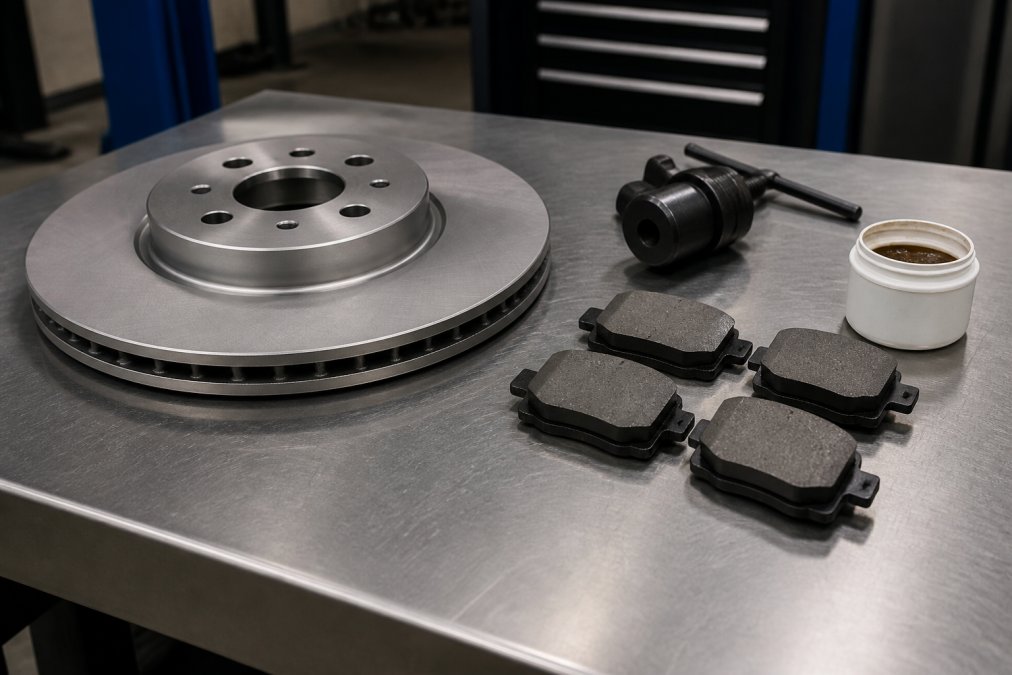
The heart of your audi a4 brake repair parts list is the friction assembly: pads, rotors, and the hardware kit that mounts them. Replacing only the pads on a worn rotor compromises stopping power and leads to premature wear on the new friction material.
Generation-Specific Part Compatibility: B7, B8, and B9
Ordering parts for the wrong generation is the single most common cause of returns and stalled projects.
B7 Chassis (2005.5-2008): These models use a 312mm front rotor and a 255mm rear rotor on most trims. The rear calipers use a conventional cable-actuated parking brake, so you can retract the piston with a standard caliper tool. The front caliper carrier bolts are typically 13mm triple-square (XZN) or 12-point. You need a brake pad wear sensor on the front axle only. If you have a 3.2L V6 model, the front rotors are larger at 345mm, so verify your engine code before ordering.
B8 Chassis (2009-2016): The B8 introduced the electronic parking brake (EPB) on the rear axle. Front rotors are typically 320mm or 345mm depending on engine output, and rear rotors are 300mm. The B8 uses a wear sensor on both the front and rear axles, four sensors total for a full brake job. The rear caliper piston cannot be pushed back with a C-clamp; it requires a diagnostic scan tool to command the EPB motor to retract. The front caliper slide pins are 7mm hex, and the carrier bolts are 18mm. A common failure point is the rear caliper guide pin boot tearing, which leads to uneven pad wear; inspect these closely.
B9 Chassis (2017-2025): The B9 moved to a fully electric parking brake integrated into the caliper. Front rotors are 330mm or 345mm, and rear rotors are 310mm on most trims. The B9 uses the same four-sensor setup as the B8. The B9's rear calipers require not just retraction but also a specific service mode in the scan tool to release the piston fully. Some B9 models use a two-piece rotor design on the front axle for the S line and performance trims, which changes the minimum rotor thickness specification. Always confirm the rotor diameter by measuring the existing rotor or checking the build sticker in the spare tire well, as wheel size alone does not reliably predict rotor size.
Brake Pad Compounds: Matching Friction to Driving
Within each generation, you choose between ceramic and semi-metallic pads. Ceramic pads are the default for daily driving because they produce minimal dust, run quietly, and are gentle on rotors. Semi-metallic pads provide a stronger initial bite and better heat transfer for aggressive driving or track days, but they generate more dust and can be noisy when cold.
For the B8 and B9, stick with ceramic pads unless you have a specific performance need. The EPB system is calibrated for the friction characteristics of the OEM pad compound; switching to a high-performance semi-metallic pad can change the parking brake holding force and trigger fault codes in some cases. If you do choose semi-metallic, select a pad that explicitly lists compatibility with the EPB system.
Rotors, Wear Sensors, and Hardware Kits
Brake rotors for the A4 are vented in the front and solid or vented in the rear, depending on the generation and engine. When ordering rotors, you must confirm the diameter and thickness for your specific chassis code, a B8 front rotor will not fit a B9, even if the wheel bolt pattern is identical. Replacing rotors in pairs, axle by axle, is essential to maintain balanced braking. If your existing rotors are within the minimum thickness specification stamped on the rotor hat and have no deep scoring or cracks, you can have them machined, but most DIYers find replacement is more cost-effective.
Wear sensors are a small but critical line item. Audi fits a sensor that triggers a dashboard warning when the pad material gets low. These sensors are one-time-use components; attempting to reuse an old sensor after a pad change often results in a false warning light. The sensor clips into the inboard pad, and the wire routes through a bracket on the caliper, if you break the clip during removal, you need a new sensor anyway. A brake hardware kit, which includes new clips, springs, and shims, is inexpensive and prevents the squealing and rattling that occurs when old hardware loses tension. The Audi owner maintenance documentation emphasizes replacing these wear items during routine brake service to keep the system operating as designed.
Calipers, Lines, and ABS Components: Inspect Before You Buy
Before you finalize your audi a4 brake repair parts list, inspect the calipers, brake lines, and ABS components. These parts don't need replacement as often as pads and rotors, but catching a problem while the wheel is off saves you from a second tear-down later.
A brake caliper should slide freely on its guide pins. If the rubber boots are torn or the pins are corroded, the caliper can seize, causing the pad to drag on the rotor. This leads to uneven pad wear, overheating, and reduced fuel economy. Inspect the caliper piston for leaks around the dust boot; any fluid weeping means the caliper needs rebuilding or replacement.
Brake lines and hoses deserve the same scrutiny. Rubber hoses degrade over time and can develop internal delamination, where the inner lining collapses and acts as a one-way valve, holding pressure on the caliper after you release the pedal. Braided stainless steel lines resist this failure mode and offer a firmer pedal, but they cost more. The ABS uses wheel speed sensors and a hydraulic modulator. While you rarely service these during a standard brake job, a faulty sensor triggers a warning light and disables the system, so inspect the sensor wiring for damage while the wheel is off.
Tools Needed for Audi Brake Job: A Complete Checklist
Assembling the right tools for an Audi brake job is just as important as the parts list itself. A common mistake is starting the job and discovering you lack a specialized tool halfway through, leaving the car immobile. The tools needed for an audi brake job include standard hand tools and a few Audi-specific items.
Your checklist starts with a floor jack, jack stands, and a lug wrench. You will need a socket set with metric sizes, specifically 13mm, 15mm, and 17mm sockets for caliper brackets and carrier bolts. A torque wrench is non-negotiable; Audi specifies exact torque values for caliper bolts and lug nuts, and guessing these values can lead to snapped bolts or loose wheels.
The specialized tools depend on your A4's rear brakes. Many models use an electronic parking brake, or EPB, which requires a scan tool to retract the piston before you can remove the caliper. Attempting to force the piston back with pliers can damage the EPB motor. For models with a conventional parking brake, you will need a brake caliper piston tool that rotates the piston clockwise as it pushes it back into the bore. A brake bleeder kit, either a vacuum pump or a pressure bleeder, is required to properly flush old fluid and remove air from the system.
Audi A4 Brake Pad Replacement Cost: Parts vs. Labor
The audi a4 brake pad replacement cost breaks down into two distinct categories: the parts you buy and the labor you either pay for or provide yourself.
If you perform the work yourself, your cost is limited to parts and any specialized tools you need to purchase. For most A4 owners, this represents a significant saving over dealership labor rates. The trade-off is your time, typically a half-day for a first-time brake job, and the need to correctly handle the EPB and bleeding procedures.
If you have the work done professionally, the quoted price combines parts markup with labor hours. Many owners choose to supply their own genuine parts to avoid dealership markups, but you must confirm the shop accepts customer-supplied components and that the parts you order match your exact model year and trim. The Federal Trade Commission guidance on auto repair choices advises consumers to compare written estimates and confirm parts warranties before authorizing work. Ordering genuine OEM parts from EUROPEAN OEM PARTS ensures you receive authentic components that meet factory specifications, with the expertise to help you verify fitment before you place your order.
Brake Fluid Flush Interval Audi: Don't Skip This Step
The brake fluid flush interval audi recommends is a maintenance item that many owners overlook, yet it is critical to the long-term health of the entire braking system. Brake fluid is hygroscopic, meaning it absorbs moisture from the air over time. This moisture lowers the fluid's boiling point, which can lead to brake fade under hard use, and it promotes internal corrosion in calipers, the master cylinder, and ABS modulator.
Audi's published maintenance schedule calls for a brake fluid flush typically every two years regardless of mileage (audiusa.com). This interval exists because fluid degradation is time-based, not just mileage-based. A car that sits in a garage still needs its fluid changed on schedule because moisture accumulates regardless of how often you drive.
Skipping this flush is a false economy. The cost of fresh fluid is minimal compared to the expense of replacing a corroded caliper or a failed ABS modulator. When you perform a brake job, the system is already open, making it the ideal time to flush the old fluid and bleed the system completely. Use only the DOT 4 specification fluid that Audi requires, and never mix different fluid types.
EPB-Specific Bleeding Challenges
On B8 and B9 models with the electronic parking brake, bleeding the rear calipers is not as simple as opening the bleeder screw and pumping the pedal. The EPB motor sits on the back of the caliper, and the hydraulic circuit routes through a small internal passage that can trap air. Using a scan tool to cycle the EPB piston through its full range of motion during the bleed process can help push trapped air out of the caliper. If you bleed the rear brakes without cycling the EPB, you may end up with a spongy pedal that does not improve no matter how many times you repeat the process.
A pressure bleeder is the preferred tool for this job because it maintains constant fluid pressure while you open the bleeder screw, which prevents air from being drawn back into the system through the threads. A vacuum bleeder can work, but it is easier to pull air past the threads on the bleeder screw if the tool is not sealed perfectly. On B9 models, the ABS modulator also needs to be cycled during a full fluid flush to replace the fluid trapped inside the modulator body. This requires a scan tool with a brake bleed service function; without it, you leave old fluid in the ABS unit, which defeats the purpose of the flush.
Brake Pad Bedding-In: The Step Most Guides Skip
After you complete the brake job and flush the fluid, the work is not done. New brake pads and rotors require a bedding-in procedure to transfer an even layer of pad material onto the rotor surface. Skipping this step leads to rotor glazing, where the pad material hardens unevenly, causing vibration, reduced stopping power, and premature wear.
The bedding-in process for the A4 is straightforward but requires a safe, empty road. From a speed of about 60 mph, apply the brakes firmly to slow the car to about 10 mph, do not come to a complete stop. Repeat this 8 to 10 times, allowing the brakes to cool for at least 30 seconds between stops by driving at a steady speed. You will notice a slight smell of hot brakes and possibly some smoke on the first few stops; this is normal as the pad material cures. After the final stop, drive for several minutes without using the brakes to allow the rotors to cool evenly. Do not engage the EPB while the rotors are hot, as this can leave a deposit on the rotor surface and cause a shudder.
DIY vs. Professional Repair: A Decision Matrix
Deciding between DIY and professional brake repair comes down to your skill level, tools, and tolerance for risk. Brakes are a safety-critical system, and a mistake during assembly can have serious consequences.
| Factor | DIY Route | Professional Route |
|---|---|---|
| Experience Level | Comfortable with basic wrenching | Prefer hands-off approach |
| Specialized Tools | Own or willing to buy scan tool | Shop has all equipment |
| EPB Handling | Confident using diagnostic tools | Handled by trained techs |
| Time Available | Full weekend to spare | Need car back same day |
| Cost | Lowest, parts only | Highest, parts plus labor |
| Risk Tolerance | High, accepts responsibility | Low, wants warranty on work |
If you have performed brake work on other vehicles and own a scan tool capable of retracting the EPB, the DIY route is rewarding and cost-effective. If you are new to automotive repair or lack the diagnostic equipment, the professional route is the safer choice. A compromise exists: source the genuine parts yourself and have a trusted independent shop perform the installation.
Conclusion: Build Your Audi A4 Brake Parts Order
A complete audi a4 brake repair parts list covers pads, rotors, wear sensors, hardware, and fluid, with careful inspection of calipers, lines, and ABS components before you start. The tools needed for an audi brake job include specialized items for the EPB and bleeding, and the brake fluid flush interval audi specifies is a two-year cycle you should not skip. Whether you tackle the job yourself or hire a professional, sourcing genuine parts that match your A4's generation is the foundation of a safe, reliable repair.
Building the right order requires confidence that every component will fit your specific model. EUROPEAN OEM PARTS provides genuine Audi, Porsche, and Volkswagen parts with the industry expertise to help you identify the correct components for your vehicle, backed by fast nationwide shipping. Get started with EUROPEAN OEM PARTS and order the exact brake parts your A4 needs with confidence.
Frequently Asked Questions
How much does a brake job cost for an Audi A4?
The Audi A4 brake pad replacement cost varies based on whether you choose OEM or aftermarket parts and if you DIY or hire a professional. Parts alone include pads, rotors, and wear sensors. Labor at a shop adds significantly to the total. For an accurate price on genuine OEM components, check current listings on the EUROPEAN OEM PARTS website, as costs fluctuate based on your specific model year and trim.
What specific parts are included in a full Audi A4 brake service?
A full Audi A4 brake service includes brake pads, brake rotors (discs), and brake wear sensors. A complete brake repair parts list also covers caliper slide pins, brake hardware clips, and brake shims. You should inspect the calipers, brake lines, and hoses for damage. Finally, a brake fluid flush is recommended to maintain proper hydraulic pressure and prevent corrosion inside the system.
Do I need to replace brake wear sensors when changing pads?
Yes, you should replace the brake wear sensors whenever you install new brake pads on your Audi A4. These sensors are a wear item designed to be replaced with the pads. Reusing an old sensor is risky because the wiring can be damaged during removal, or it may already be worn down. Installing a fresh sensor ensures your dashboard warning light functions correctly and gives you an accurate reading for the life of the new pads.
What is the difference between OEM and aftermarket brake parts for Audi?
OEM (Original Equipment Manufacturer) brake parts are made to the exact specifications Audi uses on the factory assembly line. They offer a perfect fit, consistent performance, and proper compatibility with systems like the electronic parking brake. Aftermarket parts vary in quality and may require modification to fit. For a vehicle like the Audi A4, using genuine OEM components helps maintain factory standards and vehicle value.