

When to Replace Your VW Passat Timing Belt
Table of Contents
- Understanding Your Passat's Timing Belt
- Recommended Timing Belt Replacement Intervals
- Signs of a Bad Timing Belt
- Consequences of Timing Belt Failure
- VW Timing Belt Kit Components
- Volkswagen Passat Timing Belt Replacement Cost
- Engine-Specific Replacement Intervals
- Checking Your Service History and Owner's Manual
- Frequently Asked Questions
Last Updated: October 1, 2026
Understanding Your Passat's Timing Belt
Your Volkswagen Passat's timing belt synchronizes the crankshaft and camshaft, ensuring valves open and close at precisely the right moments. Unlike a serpentine belt that drives accessories, the timing belt controls engine timing itself. If it fails, your engine stops immediately, and in many Passat models, a broken timing belt causes catastrophic engine damage. Knowing the right timing belt replacement interval protects your engine and keeps your Passat running reliably for years.
Recommended Timing Belt Replacement Intervals
Timing belt replacement intervals depend on mileage and time, whichever comes first. Your owner's manual specifies both for your model.
Mileage-Based Intervals
Most Volkswagen Passat models require timing belt replacement between 60,000 and 105,000 miles, depending on engine type and model year. Check your owner's manual for your specific interval. Exceeding this mileage puts your engine at serious risk, a worn timing belt can snap without warning.
Time-Based Intervals
Rubber degrades over time due to thermal cycling and engine heat. Volkswagen recommends timing belt replacement every 5 to 10 years, depending on your Passat model. A 10-year-old belt may fail even with low mileage. Replace your timing belt based on whichever comes first: the mileage limit or the time limit.
Signs of a Bad Timing Belt
A failing timing belt shows warning signs before complete failure. Recognizing these signs helps you schedule replacement before catastrophic engine damage occurs.
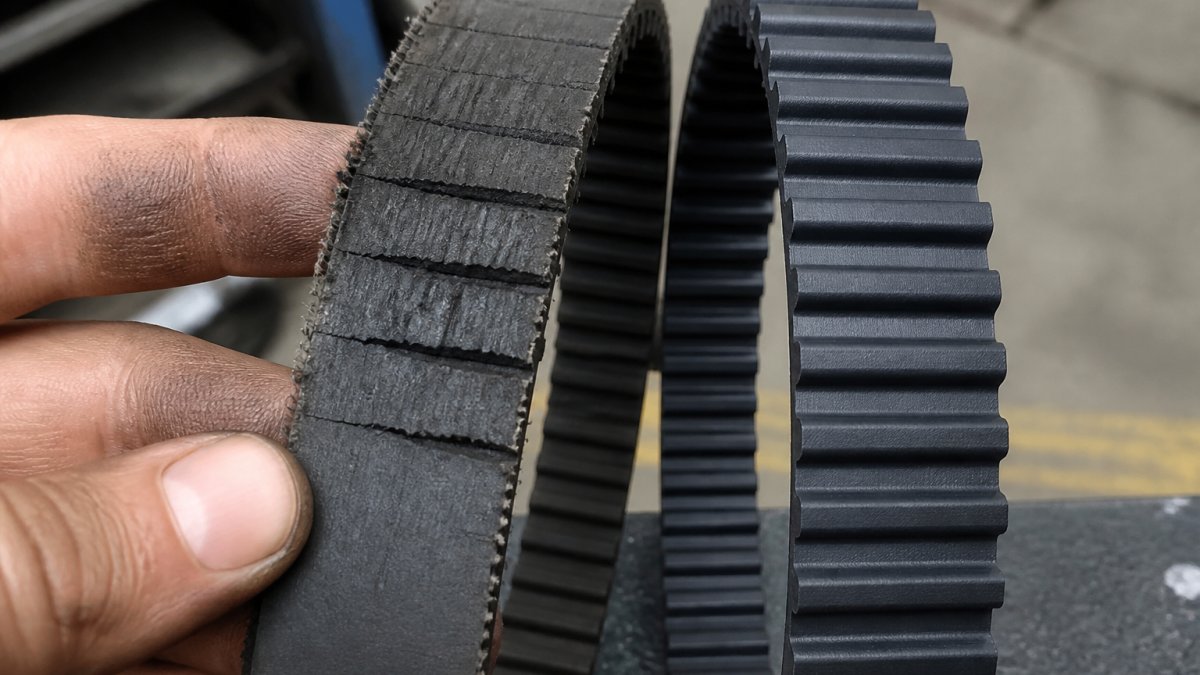
Audible and Performance Warning Signs
Common signs of a bad timing belt include:
- Squealing or chirping noises from the engine compartment, especially on cold starts or acceleration. This often indicates the tensioner is failing to maintain proper belt tension.
- Engine misfiring or rough idling, caused by the belt slipping on the crankshaft or camshaft sprocket.
- Difficulty starting the engine, particularly if the belt is slipping and preventing the camshaft from rotating at the correct speed.
- Check engine light illumination, which may indicate timing issues detected by the engine control module.
- Visible oil leaks near the timing belt cover, suggesting the cover gasket is degraded, often a sign the belt itself is aging.
Visual Inspection Guide
You can perform a basic visual inspection of your timing belt without removing it completely:
-
Access the belt: Locate the timing belt cover on your Passat's engine, typically on the front of the engine block.
-
Look for cracks: Inspect for visible cracks running perpendicular to the belt's direction. Small hairline cracks indicate brittleness; deep cracks signal imminent failure.
-
Check for fraying or peeling: The belt's edges should be smooth and intact. Fraying or missing chunks indicate advanced wear.
-
Examine the belt's color and texture: A healthy timing belt is dark gray or black with a smooth surface. A chalky, dull, or powdery belt has suffered heat damage.
-
Inspect the tensioner: The tensioner pulley should not wobble, make noise, or show visible damage. If it does, it should be replaced along with the belt.
-
Check pulley alignment: Spin the pulleys by hand (engine off). They should rotate freely without grinding sounds or resistance.
Distinguishing Timing Belt Issues from Other Problems
Not all engine noises or starting problems indicate timing belt failure. A squealing serpentine belt is usually louder and more obvious when cold or under load, while timing belt noise is a quieter chirping from deep within the engine. Misfire codes specific to individual cylinders (P0300-P0308) suggest spark plugs or fuel injectors, not the timing belt. If the engine cranks slowly or not at all, the battery or starter is likely the culprit; timing belt issues usually allow normal cranking but prevent the engine from catching.
When to Schedule Inspection
If you notice any of these signs, have a qualified mechanic inspect the belt immediately. A belt showing visible cracks or fraying can fail without warning. If you're approaching your manufacturer's recommended replacement interval, schedule replacement proactively rather than waiting for symptoms.
Consequences of Timing Belt Failure
When a timing belt breaks, the camshaft stops turning while the crankshaft continues moving, causing pistons to collide with open valves. In interference engines (used in most modern Passat models), this collision causes catastrophic damage requiring full engine replacement. Engine replacement costs thousands of dollars, while preventative timing belt replacement costs a fraction of that amount.
VW Timing Belt Kit Components
A complete timing belt replacement kit includes more than just the belt. Replacing these components together prevents future failures and saves labor costs.
A typical timing belt kit contains:
- Timing belt - the main component
- Tensioner - maintains proper belt tension
- Idler pulleys - guide the belt smoothly
- Water pump - often replaced during belt service
- Seals and gaskets - prevent oil leaks
The tensioner keeps the belt at proper tension. A worn tensioner can't maintain correct tension, causing the belt to slip or wear prematurely. Replacing it with the belt prevents future problems.
Idler pulleys guide the belt around the engine.
Volkswagen Passat Timing Belt Replacement Cost
Timing belt replacement cost depends on labor, parts, and your specific Passat model. Labor typically represents the largest portion of the total cost.
Engine-Specific Replacement Intervals
Different Passat engines have different timing belt requirements. Your specific engine type and model year determine the correct replacement interval. Generic '60,000 to 105,000 miles' guidance misses critical nuances that affect your maintenance schedule.
Common Passat Engine Types and Their Intervals
Gasoline Engines:
- 1.8T (turbocharged, 2006-2017 models): 105,000 miles or 10 years. Despite higher operating temperatures from turbocharging, Volkswagen extended the interval for this engine due to improved belt materials. However, turbocharged engines run hotter, so inspect the belt at 80,000 miles for early signs of degradation.
- 2.0L (naturally aspirated, 2012-2019 models): 105,000 miles or 10 years. This engine is less stressed than the turbocharged variant, allowing the longer interval.
- 2.5L (naturally aspirated, 2006-2010 models): 105,000 miles or 10 years. Older Passat 2.5L models used a timing chain rather than a belt on some variants, verify your specific model year in your owner's manual.
Diesel Engines:
- 2.0 TDI (turbocharged diesel, 2009-present): 120,000 miles or 10 years. Diesel engines produce higher torque and run at different temperatures than gasoline engines, but the 2.0 TDI's robust design allows an extended interval. However, diesel engines are sensitive to fuel quality and maintenance; poor maintenance can shorten belt life significantly.
- 1.9 TDI (turbocharged diesel, 2006-2009 models): 105,000 miles or 10 years. Earlier TDI variants had a shorter interval due to less refined engine management.
Why Engine Type Matters
Turbocharged engines operate at higher combustion temperatures and boost pressures. The timing belt experiences greater stress from the camshaft and crankshaft, which rotate faster under load. While modern turbocharged engines (like the 1.8T) have extended intervals, they require more frequent visual inspections. If you drive aggressively or tow frequently, consider replacing the belt at 80,000 miles rather than waiting until 105,000.
Model Year Considerations
Volkswagen has updated timing belt recommendations multiple times:
- 2006-2010 Passat: Most models use 105,000-mile intervals, though some early 2006 models may specify 60,000 miles. Check your owner's manual.
- 2011-2015 Passat: Intervals standardized at 105,000 miles for gasoline engines; 120,000 miles for diesel engines.
- 2016-present Passat: Intervals remain at 105,000 miles (gasoline) and 120,000 miles (diesel), though some newer models may use a timing chain instead of a belt, verify in your manual.
How to Identify Your Engine
Your engine code is printed on the engine block and listed in your owner's manual and vehicle registration. Common locations for the engine code:
- On the front of the engine block, below the cylinder head
- On a sticker inside the driver's door jamb
- In the "Technical Specifications" section of your owner's manual
Factors That Shorten Belt Life
Regardless of your engine type, certain driving conditions and maintenance lapses can reduce timing belt longevity:
- Extreme temperatures: Belts degrade faster in very hot climates or if the engine runs consistently hot due to cooling system issues.
- Infrequent oil changes: Old oil loses its cooling and lubricating properties, causing the belt and tensioner to work harder.
- Towing or heavy loads: Turbocharged engines under sustained load experience higher temperatures and stress.
- Neglected serpentine belt: If the serpentine belt slips or is misaligned, it can throw the timing belt out of alignment, causing premature wear.
Checking Your Service History and Owner's Manual
Your owner's manual contains the definitive timing belt replacement interval for your Passat. This document specifies both mileage and time-based intervals.
Frequently Asked Questions
When should a VW Passat timing belt be changed?
Most VW Passat models require timing belt replacement between 60,000 and 105,000 miles, depending on engine type and model year. Check your owner's manual for your specific vehicle's interval, as some engines use a timing chain instead. Additionally, replace the belt every 10 years regardless of mileage if you drive infrequently. Consult your service manual to confirm the exact interval for your Passat's engine.
What are the signs of a failing timing belt in a Volkswagen?
Warning signs include a ticking noise from the engine, rough idling, difficulty starting, or visible cracks and fraying on the belt itself during visual inspection. If the belt shows significant wear or rubber degradation, replacement is overdue. A failing belt may also cause the engine to run unevenly or produce unusual sounds during acceleration. Address these symptoms immediately to avoid catastrophic engine damage.
What happens if a timing belt breaks while driving?
A broken timing belt can cause catastrophic engine failure, especially in interference engines where pistons and valves occupy the same space. When synchronization is lost, valves may collide with pistons, resulting in bent valves, piston damage, and severe internal engine damage. This is why preventative replacement before failure is critical. Repair costs for engine damage far exceed the cost of scheduled belt replacement.
Is it necessary to replace the water pump with the timing belt?
While not strictly mandatory, replacing the water pump during timing belt service is highly recommended. The water pump shares the same access point and labor costs, making it economical to replace both simultaneously. A failing water pump can cause engine overheating and thermal cycling stress on the new belt, reducing its lifespan. Many service professionals include the water pump in a complete timing belt kit for this reason.
Timing belt maintenance is one of the most important services you can perform on your Passat. Waiting until the belt fails leaves you stranded and facing expensive engine damage. Schedule replacement at the interval specified in your owner's manual. European OEM Parts provides genuine Volkswagen timing belt kits with all necessary components for a complete, professional replacement that keeps your Passat running reliably.