

Where to Buy OEM Audi Filters: A Buyer's Guide
Table of Contents
- Why Genuine OEM Audi Filters Matter for Your Vehicle
- OEM vs Aftermarket Oil Filters: What's the Real Difference
- How to Check Audi Part Numbers Before You Buy
- Where to Buy OEM Audi Filters Online
- Understanding OEM Audi Parts Warranty and Return Policies
- How to Verify Authentic OEM Audi Filters
- Installation Tips and Tool Requirements for DIY Maintenance
- Environmental Impact and Proper Filter Disposal
- Frequently Asked Questions
Last Updated: September 2, 2026
Why Genuine OEM Audi Filters Matter for Your Vehicle
Using factory original filters protects your engine's core function. OEM Audi filters are engineered to exact specifications for your vehicle's lubrication system, directly impacting how well your engine breathes and circulates fluid. The difference between genuine and aftermarket filters comes down to precision: OEM filters use filtration media and gasket seals calibrated to your engine's flow rate and pressure requirements. Bypass valves, the safety mechanism protecting your engine during cold starts, are calibrated to your vehicle's specifications. An incorrectly rated bypass valve can allow unfiltered oil to circulate during startup, introducing contaminants that cause engine sludge.
Filter choice affects long-term engine reliability. Factory original components carry performance standards that manufacturers enforce. Owners who stick with genuine parts maintain resale value and avoid premature wear. The cost difference between OEM and aftermarket is typically recovered through extended engine life and fewer warranty complications.
OEM vs Aftermarket Oil Filters: What's the Real Difference
A genuine OEM Audi filter meets exact specifications for micron rating, flow rate, and anti-drain back valve performance. Aftermarket equivalents aim to hit a range; OEM components hit a target.
OEM filters use synthetic media blended to catch particles down to a specific micron size while maintaining the pressure differential your engine expects (peer-reviewed research). An aftermarket filter rated at "similar" micron levels may use cheaper materials that clog faster or fail to capture smaller contaminants. Over 10,000 miles, the difference compounds and your oil becomes dirtier (sae.org).
The anti-drain back valve is where most aftermarket filters fall short. This one-way valve prevents oil from draining when your engine is off, ensuring immediate lubrication on cold starts. OEM valves are calibrated to your engine's oil pressure curve. Aftermarket manufacturers often use generic valves that work "well enough" across multiple vehicle types, which means they work perfectly for none.
Housing integrity matters significantly. OEM filters use gasket seals engineered to your engine's bolt pattern and torque specifications. Genuine filters account for precise gasket compounds and housing thickness. The cheap filter passes basic tests; the expensive one passes Audi's testing, including pressure cycling, temperature cycling, and contamination resistance that aftermarket manufacturers rarely perform.
How to Check Audi Part Numbers Before You Buy
Every OEM Audi component carries a part number that encodes information about fitment, generation, and specifications. Learning to read these numbers eliminates guesswork when ordering online.
Audi part numbers follow a consistent structure. The first digits identify the component category; filters always start with specific prefixes. The middle digits encode the engine type and generation. The final digits specify material, capacity, or performance variant. A filter for a 2.0L turbocharged engine carries different digits than a 3.0L naturally aspirated engine, even though they look similar.
Your vehicle identification number (VIN) is the most reliable way to confirm fitment. Characters four through nine encode the model, body style, engine, and transmission. A VIN lookup tool cross-references these against Audi's parts database and returns the exact filters compatible with your specific chassis code. A 2015 Audi A4 could have multiple engine options depending on trim level and market; your VIN eliminates ambiguity by pinpointing your exact powertrain.
Most online retailers include a VIN lookup tool on their product pages. Enter your 17-character VIN, and the system returns compatible part numbers. When you buy OEM Audi filters from a vendor like European OEM Parts, this verification happens automatically.
Keep your part number written down. Genuine filters always carry the same part number across vendors; if a seller offers "equivalent" filters under different numbers, they're not OEM.
Where to Buy OEM Audi Filters Online
Direct from Authorized Retailers
Authorized Audi dealerships remain the most straightforward source for genuine OEM filters. They maintain live inventory tied to Audi's parts management system, ensuring stock accuracy. Dealership staff can verify fitment using your VIN in real time.
The trade-off is price. Dealerships typically price OEM filters at manufacturer's suggested retail. Return policies are straightforward: most accept returns within 14-30 days with original packaging and receipt. Dealerships also stock related components, gaskets, drain plugs, crush washers, that you might need during a filter change.
Specialized European Parts Suppliers
Independent retailers focused on European brands offer broader inventory and competitive pricing on OEM filters. These suppliers maintain relationships with Audi's parts distributors and often stock hard-to-find components for older models.
European OEM Parts specializes in genuine components for Audi, Porsche, and Volkswagen enthusiasts nationwide. The advantage of specialists is expertise; staff understand fitment nuances and can guide you toward the right filter for your specific engine variant. Pricing at specialized retailers is competitive. Return policies tend to be flexible; check the specific terms on the website.
Verify that the supplier sources directly from Audi's authorized distributors. Legitimate retailers display their distributor certifications on their website.
Understanding OEM Audi Parts Warranty and Return Policies
OEM Audi filters carry manufacturer's warranty covering defects in materials and workmanship, regardless of where you purchase. Warranty does NOT cover improper installation, over-tightening, mixing with incompatible components, or using incorrect torque specifications.
Return policies vary by retailer. Dealerships typically allow 14-30 days for returns with original packaging. Specialized retailers like European OEM Parts offer flexible return policies; check the specific terms on their website. Always check the return window before purchasing; some vendors charge restocking fees on returns.
For warranty claims on defective filters, contact the retailer where you purchased. They'll handle the replacement or refund under their warranty terms.
How to Verify Authentic OEM Audi Filters
Counterfeit OEM filters exist in the market, particularly for popular models. Learning to identify genuine components protects you from accidentally installing a fake part.
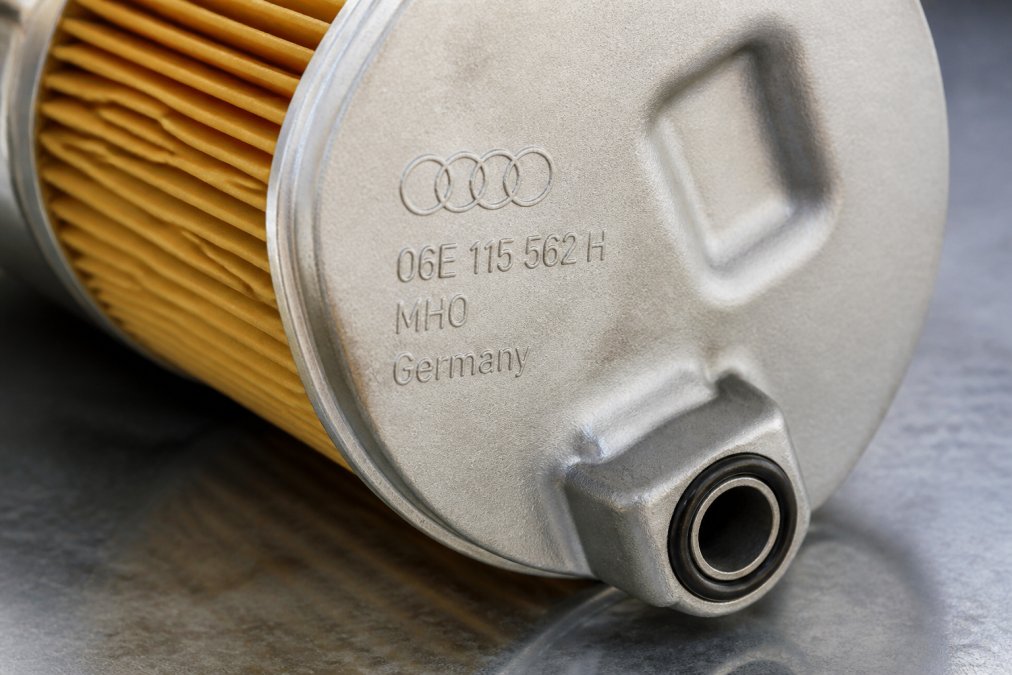
Start with the packaging. Genuine OEM Audi filters arrive in branded boxes with consistent printing quality. The part number on the box matches the part number on the filter itself. Spelling is perfect, colors are bright, and the Audi logo is crisp.
The filter housing itself tells the story. Genuine OEM filters have precise stamping of the part number directly into the aluminum or steel housing. The stamping is deep, clear, and readable under normal light. The Audi logo is embossed, not printed. Examine the gasket seal: OEM filters use high-quality rubber compounds that feel consistent and slightly tacky. The gasket sits evenly in its groove with no gaps.
The housing seams should be clean and uniform. Genuine OEM filters use precision welding that leaves minimal visible seam marks. The housing wall thickness is consistent around the entire circumference.
Verify the part number against Audi's official database. Every legitimate OEM filter part number can be cross-referenced on Audi's website or through authorized dealer systems. Purchase from established retailers with verifiable distributor relationships. European OEM Parts sources directly from Audi's authorized parts network, which means every filter is traceable to the manufacturer.
Installation Tips and Tool Requirements for DIY Maintenance
Changing an oil filter yourself takes 15-20 minutes once you understand the process. The right tools and technique prevent leaks and ensure proper seal.

Tools you'll need:
- Oil filter wrench (sized for your specific filter diameter)
- Socket wrench set (for drain plug removal)
- Drain pan (minimum 5-quart capacity)
- Rags or shop towels
- New crush washer for drain plug (OEM specification)
- Jack and jack stands (if accessing filter from below)
Locate your oil filter in your owner's manual. Warm your engine briefly (30 seconds) to thin the oil, then shut it off and wait 2 minutes. Place your drain pan directly under the filter.
Loosen the filter by hand first. Once loose, carefully unscrew by hand to avoid spilling oil on the engine block. Inspect the mounting surface and wipe away any old oil, debris, or rubber residue from the old gasket.
Apply a thin layer of new oil to the rubber gasket on the new filter. Thread the new filter by hand until the gasket contacts the mounting surface, then rotate an additional three-quarter turn. This compresses the gasket evenly without over-tightening. Over-tightening causes gasket damage and leaks.
Replace the drain plug crush washer with a new OEM washer. Reuse of crush washers is the leading cause of oil leaks in DIY maintenance. Torque the drain plug to specification, typically 25 Nm for Audi engines.
Fill with the correct oil type and quantity. Run the engine for 30 seconds, shut it off, wait 2 minutes, and check the level. Check for leaks around the filter and drain plug. A small drip is normal during the first drive; steady seeping indicates improper installation.
Dispose of the old filter properly. Many retailers accept used filters for recycling. Never pour old oil down drains.
Environmental Impact and Proper Filter Disposal
Used oil filters contain residual oil that poses environmental and health risks if disposed improperly (the EPA). Oil filters are recyclable: the steel housing can be separated and processed as scrap metal. The filter media and gasket materials are incinerated or composted depending on the facility.
Never throw used filters in household trash. Many municipalities classify used automotive filters as hazardous waste. Drop-off locations for used filters are widely available at auto parts retailers, quick-lube shops, and municipal hazardous waste facilities at no charge.
The environmental case for OEM filters extends beyond disposal. Factory original filters are manufactured to tighter tolerances, capturing more contaminants per service interval. Cleaner oil means longer engine life and fewer fluid changes over the vehicle's lifetime, resulting in less waste generated overall compared to aftermarket filters that require more frequent replacement.
=== FAQ ANSWERS (audit these too, same rules) ===
[1] Q: How do I verify that OEM Audi filters I buy online are actually genuine? A: Check the packaging for factory original branding and security features. Verify the part number matches your vehicle's VIN through Audi's official documentation or a trusted parts catalog. Genuine OEM filters have precise gasket seals, proper weight specifications, and consistent labeling. Reputable retailers provide documentation tracing parts to authorized distributors. Counterfeit filters often show poor printing quality, incorrect part numbers, or mismatched housing integrity. Buy from established retailers specializing in genuine European OEM parts to minimize risk.
[2] Q: What's the difference between OEM and aftermarket oil filters for Audi vehicles? A: OEM filters meet factory original specifications for filtration efficiency, bypass valve performance, and anti-drain back valve design. They're engineered for your specific model's lubrication system and service intervals. Aftermarket filters vary widely in quality; some lack proper bypass valve function, reducing engine sludge prevention during cold starts. OEM filters maintain warranty compliance and direct fit compatibility. Aftermarket equivalents may cost less but often compromise on filter media quality and housing integrity, potentially affecting long-life performance and contaminant removal.
[3] Q: Do OEM Audi filters come with a warranty? A: Most genuine OEM Audi filters come with manufacturer warranty coverage that protects against defects in materials and workmanship. Warranty terms vary by retailer. Always verify warranty details before purchase. Keep your receipt and packaging as proof of authenticity. Check the retailer's return and warranty policy to understand what happens if a filter fails or doesn't fit your vehicle.
[4] Q: What tools do I need to replace an OEM Audi filter myself? A: Most DIY filter changes require a socket wrench (typically 86mm or 74mm depending on your model), a drain pan, and an oil filter wrench or strap wrench. Some Audi models use cartridge-style filters accessible from the top of the engine, requiring only a socket. Check your owner's manual for torque specifications to avoid over-tightening the new filter. Have rags or shop towels ready for spills. Always consult your vehicle's service manual for the exact tool requirements and proper installation sequence for your specific chassis code.
Frequently Asked Questions
Q: How do I verify that OEM Audi filters I buy online are actually genuine?
A: Check the packaging for factory original branding and security features. Verify the part number matches your vehicle's VIN through Audi's official documentation or a trusted parts catalog. Genuine OEM filters have precise gasket seals, proper weight specifications, and consistent labeling. Reputable retailers provide documentation tracing parts to authorized distributors. Counterfeit filters often show poor printing quality, incorrect part numbers, or mismatched housing integrity. Buy from established retailers specializing in genuine European OEM parts to minimize risk.
Q: What's the difference between OEM and aftermarket oil filters for Audi vehicles?
A: OEM filters meet factory original specifications for filtration efficiency, bypass valve performance, and anti-drain back valve design. They're engineered for your specific model's lubrication system and service intervals. Aftermarket filters vary widely in quality; some lack proper bypass valve function, reducing engine sludge prevention during cold starts. OEM filters maintain warranty compliance and direct fit compatibility. Aftermarket equivalents may cost less but often compromise on filter media quality and housing integrity, potentially affecting long-life performance and contaminant removal.
Q: Do OEM Audi filters come with a warranty?
A: Most genuine OEM Audi filters come with manufacturer warranty coverage that protects against defects in materials and workmanship. Warranty terms vary by retailer. Always verify warranty details before purchase. Keep your receipt and packaging as proof of authenticity. Check the retailer's return and warranty policy to understand what happens if a filter fails or doesn't fit your vehicle.
Q: What tools do I need to replace an OEM Audi filter myself?
A: Most DIY filter changes require a socket wrench (typically 86mm or 74mm depending on your model), a drain pan, and an oil filter wrench or strap wrench. Some Audi models use cartridge-style filters accessible from the top of the engine, requiring only a socket. Check your owner's manual for torque specifications to avoid over-tightening the new filter. Have rags or shop towels ready for spills. Always consult your vehicle's service manual for the exact tool requirements and proper installation sequence for your specific chassis code.
Finding the right OEM Audi filters requires matching your vehicle's specifications with a reliable supplier. European OEM Parts connects you with genuine components engineered for your specific engine, backed by fast shipping and straightforward return policies. Browse our catalog by VIN or part number to locate the exact filter your Audi requires, and get started on your next service with confidence that you're installing factory original components.
This article was written using GrandRanker